April 04, 2026: The Great Pivot—From Chatbots to Autonomous Agents and Sovereign AI
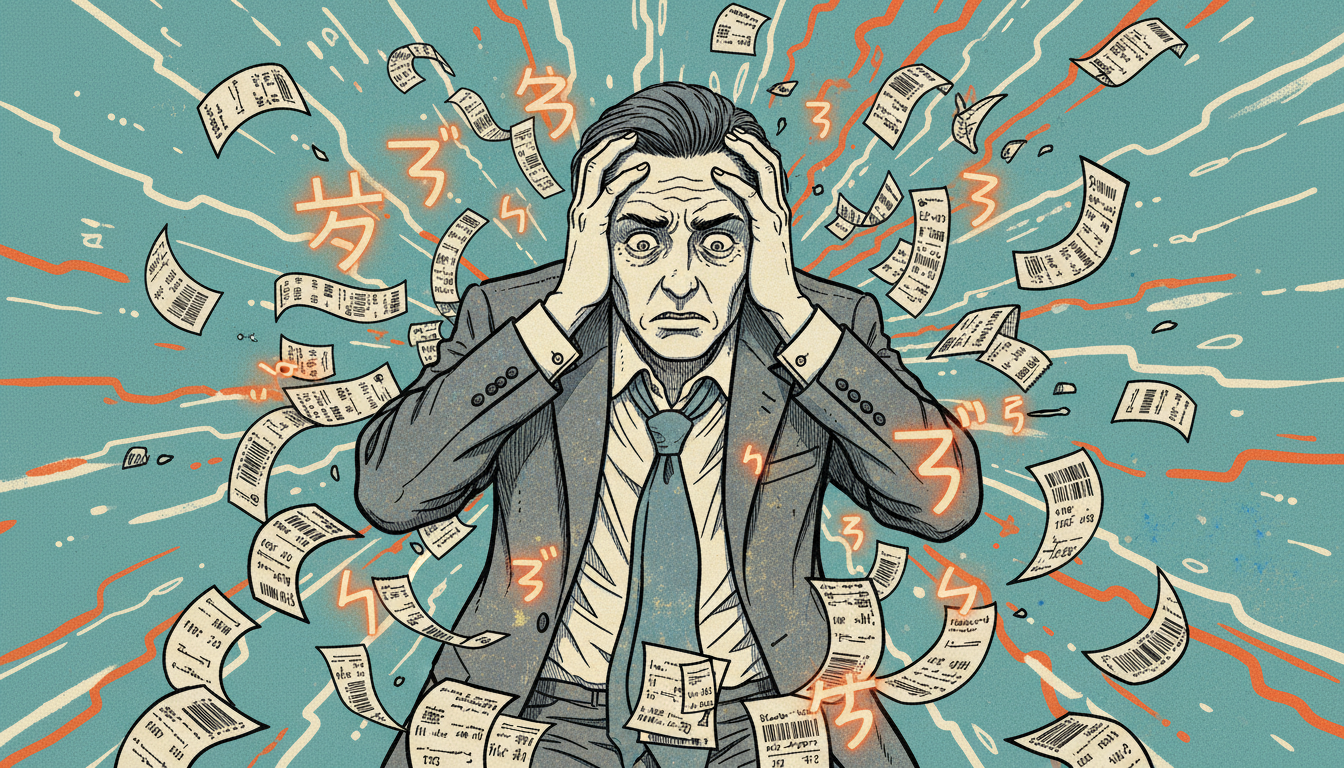
As AI moves from chat to work, companies face a brutal reality: autonomy burns compute. Nvidia builds the factory while Anthropic protects its margins. The agentic era has arrived—and the bill is due.
Today’s Key AI Stories
- Nvidia Unites Enterprises: Launches open-source Agent Toolkit with 17 tech giants.
- Anthropic Hits the Brakes: Cuts off third-party agents from Claude subscriptions due to massive compute costs.
- Microsoft Goes Solo: Launches 3 new MAI models, directly challenging OpenAI and Google.
- Arcee Champions Open Weights: Releases Trinity-Large-Thinking, a 399B parameter model for enterprise sovereignty.
- SpaceX Looks Up: Proposes putting one million data centers in Earth's orbit.
- Developers Get Lean: New workflows replace complex Vector DBs with simple SQLite and massive context windows.
- FAANG Interview Traps: Emphasize statistical critical thinking over raw math.
- Deep Learning & Alignment: DenseNet fundamentals revisit efficiency, while Google tests if LLMs share human values.
The Main Topic: The Era of Action Has Arrived (And It's Expensive)
Today is April 4, 2026. The AI landscape is shifting entirely. We are no longer just talking to AI. We are asking AI to work. We call this the agentic era. But this transition brings a brutal reality: cost. Let us peel the onion. Let us look at what happened today.

1. Nvidia Builds the Factory, Anthropic Bills for the Power
Nvidia just dropped a bomb at GTC 2026. Jensen Huang unveiled the Agent Toolkit. It is an open-source platform. Seventeen massive companies signed up. Adobe, Salesforce, SAP, and more. They are building autonomous AI agents. Nvidia provides the blueprint. They also launched new Vera CPUs and Rubin GPUs. Uber wants robotaxis by 2028. The physical and digital worlds are merging.
But there is a catch. A big one.
While Nvidia pushes agents, Anthropic is pulling the plug. Starting today, Claude Pro and Max subscribers cannot use third-party tools like OpenClaw. You must pay as you go. Why? Because agents are relentless. A human types a prompt. They read the answer. They take a break. An agent does not sleep. It loops. It searches. It acts. It burns compute.
Anthropic says these tools bypass their optimizations. They ruin "prompt cache hit rates." First-party tools reuse text to save money. Third-party tools do not. One OpenClaw agent can burn $5,000 in a day. Anthropic cannot subsidize this under a $20 subscription.

What It Means: The Compute Tax
Intelligence used to be the bottleneck. Now, autonomy is the bottleneck. The smarter the agent, the more it loops. The more it loops, the more it costs. Hardware makers like Nvidia will thrive. API providers like Anthropic must protect their margins. For developers, the days of "all-you-can-eat" AI buffets are over. You must optimize. Every token counts.
2. The Rebellion: Sovereignty and Open Weights
Enterprises are waking up. They do not want to be locked in. They do not want their data in someone else's cloud. Two major news items highlight this rebellion.
First, Microsoft. The company that funded OpenAI is now competing with them. Microsoft launched three in-house models: MAI-Transcribe-1, MAI-Voice-1, and MAI-Image-2. Small teams built them. Less than 10 engineers each. They run on half the GPUs of their rivals. They beat OpenAI's Whisper and Google's Gemini on benchmarks. Microsoft is hedging its bets. They want their own superintelligence.

Second, Arcee. This San Francisco lab released Trinity-Large-Thinking. It is a 399-billion parameter model. It is open source under Apache 2.0. But here is the magic: only 1.56% of parameters are active per token. It is 96% cheaper to run than proprietary models like Opus 4.6.
Arcee calls this "American Open Weights." It is a direct answer to closed models. Banks, defense firms, and hospitals need this. They must inspect their infrastructure. They cannot send secrets to a black box. Trinity allows them to own their brains.

What It Means: The End of the Monolith
The AI market is splitting. On one side, giant closed models. On the other, hyper-efficient, open-weight models. Enterprises will choose the latter. They want control. They want low costs. Microsoft proves small teams can win. Arcee proves open source can scale. The moat of the AI giants is shrinking.
3. Developers Get Pragmatic: Erasing Complexity
While tech giants fight over massive servers, everyday developers are getting smarter. They are cutting the fat.
Look at the new trend in personal AI. Developers are ditching Vector Databases. For years, if you wanted an AI to "remember" your notes, you used a Vector DB. You turned text into embeddings. You did similarity searches. It was complex. It required cloud services like Pinecone.
Not anymore. Today, models like Claude Haiku have 250,000-token context windows. You can fit months of notes into one prompt. Developers are moving back to simple SQLite databases. An ingest agent reads a note. It extracts summaries. It saves it to SQLite. When you ask a question, the system just feeds all recent memories directly into the LLM. The LLM reasons over the text directly. It is better than vector search. It is cheaper. It is local.

Similarly, agent developers are embracing Docker. They don't want cloud bloat. They spin up local containers. Ollama for local LLMs. Qdrant for local vectors. n8n for workflows. Firecrawl for web scraping. Local is fast. Local is free.
What It Means: Simplicity is the Ultimate Sophistication
Technology swings like a pendulum. First, we build complex systems to solve problems. Then, raw power increases. The complex systems become obsolete. Massive context windows just killed the need for personal Vector DBs. Hardware constraints forced innovation. Now, software simplicity is driving adoption.
4. Pushing the Physical and Logical Frontiers
To support this new world, we must solve physical and logical limits.
SpaceX has a wild idea. They want to put one million data centers in orbit. Earth cannot handle the heat and power demands of AI. Space is cold. Space has solar power. But there are hurdles. How do you manage 80°C heat in a vacuum? How do you block cosmic radiation? How do you avoid space debris? It sounds like sci-fi. But Jensen Huang's AI chips will need somewhere to live.

On the logical side, we are revisiting deep learning fundamentals. A popular breakdown of DenseNet today reminds us how we solve the "vanishing gradient" problem. By using channel-wise concatenation instead of element-wise summation, DenseNet allows deep networks to learn without losing signal. Efficiency is everything.
But the data itself must be clean. Today's report on FAANG interview traps proves this. AI is useless if the data is flawed. Big tech does not test your math. They test your critical thinking. They test for Simpson's Paradox. They test for Selection Bias. They test for p-Hacking. If you feed an AI confounded data, it will give you confident, dangerous lies.
Finally, how do we know the AI is safe? Google Research just released a framework. They use psychological tests. They create Situational Judgment Tests (SJTs) for LLMs. They compare AI answers to human consensus. Large models align well. But we must keep measuring. An autonomous agent must share our values. If it does not, its efficiency becomes a weapon.
Summary: The Pieces Are Coming Together
Look at the big picture. Nvidia provides the agent blueprint. Anthropic defines the true cost. Microsoft and Arcee break the monopolies. Developers simplify the workflows. SpaceX looks to the stars for power. And Google ensures the AI thinks like us.
The experimental phase of AI is over. The industrial phase has begun. Build your agents carefully. Watch your costs. Keep your data local. And always, always question the numbers.
This is the new reality. Are you ready?