April 07, 2026: AI Isn't Taking Your Job, Automation Is. Welcome to the Orchestrator Era.
The AI revolution isn't about robots replacing humans—it's about automation changing everything. From agent orchestrators managing AI swarms to behavior-based security, the rules of work are being rewritten.
Today’s Key AI Stories
- The Job Myth: AI isn't your enemy. Automation is. Economists urge a "Manhattan Project" to study AI's true impact on the workforce.
- Agent Orchestration: From running multiple Claude coding agents in parallel to deploying OpenClaw personal assistants, humans are becoming managers of AI swarms.
- Supply Chain Disruption: Small US sellers are using AI tools like Alibaba's Accio to compress weeks of supplier hunting into a single chat.
- Behavior is the New Password: Passwords and FaceID are failing against AI deepfakes. How you scroll and type is your new digital identity.
- The Governance Gap: As AI agents act autonomously, Deloitte warns that corporate safeguards are lagging. OpenAI launches a Safety Fellowship to find solutions.
The Deeper Analysis: Peeling Back the Layers of the AI Era
Many people are panicking. They look at the news. They see AI models getting smarter. They think: "My job is next."
You are looking at the wrong enemy.
Today's news reveals a massive shift. The underlying logic of the AI revolution is changing. We are moving from "AI as a chatbot" to "AI as an autonomous workforce."
Let us look at the facts. Let us extract the truth.
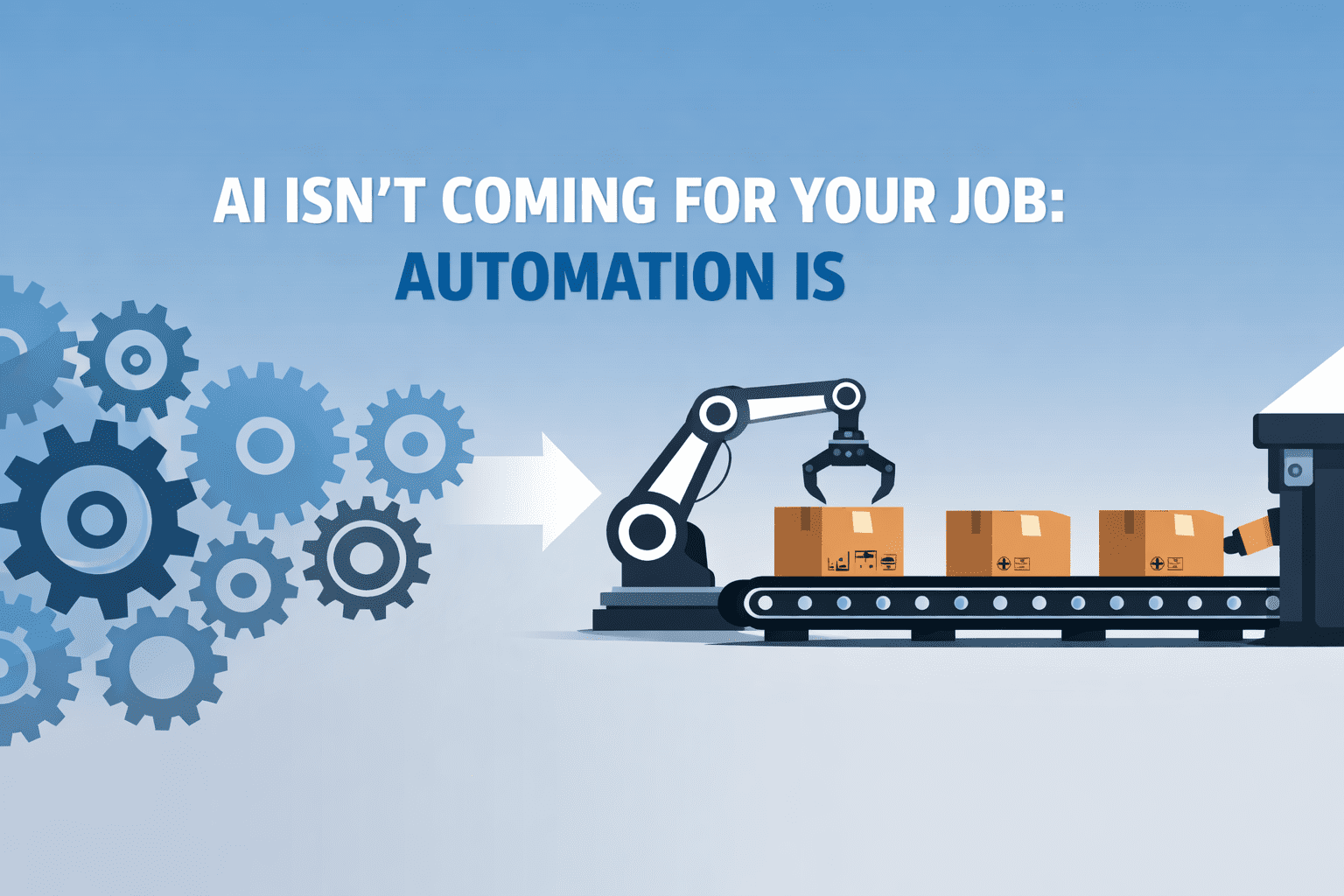
1. The Illusion of AI vs. The Reality of Automation
People confuse two words. AI. And automation.
They are not the same.
AI is a capability. It is a brain. It can write. It can analyze. It can predict.
Automation is a process. It is a pipeline. It replaces human action.
An article in KDnuggets today makes a brilliant point. AI can write a product description. But automation decides if a human ever reviews that description before it goes live. Automation is what actually eats the job.
Automation targets tasks. Not whole jobs. It attacks the predictable. The high-volume. The rule-based.
But we do not even know how fast this is happening.
Economist Alex Imas from the University of Chicago is sounding an alarm. He says we need a "Manhattan Project" for data. We need to measure "price elasticity."
What does that mean?
When AI makes a service cheaper, does demand go up? We know this for groceries. If apples are cheap, you buy more. But what about web developers? What about tutors?
If AI makes code cheaper, do we hire fewer coders? Or do we build ten times more software?

We don't know. Policymakers are flying blind. But while they figure it out, the smart workers are adapting. They are changing their roles entirely.
2. The Rise of the "Agent Orchestrator"
The era of "one prompt, one answer" is over. Welcome to the era of the Agent Orchestrator.
Look at software engineers. They are no longer just writing code.
They are running Claude Code agents. In parallel. They spin up one agent to fix a bug. While it works, they spin up another to build a feature. They use git "worktrees" to keep the agents from stepping on each other's toes.
They are managing a digital team.
This is not just for tech elites. Look at ordinary users. They are using OpenClaw, an open-source AI assistant. They are building bots for WhatsApp. They are running models locally with Ollama. They are connecting AI to Google Workspace to read emails and book meetings.
They are building personal, 24/7 autonomous staffs.
And look at small businesses. US entrepreneurs are using AI tools like Alibaba's Accio. Finding a manufacturer in China used to take weeks. Now? It takes a single chat.
The AI suggests modifications. It finds the factory. It cuts costs.

What is the common thread here?
Leverage.
The value of doing the work is dropping to zero. The value of orchestrating the work is skyrocketing. The human is the manager. The AI is the worker.
You must become an orchestrator. Or you will be orchestrated.
3. The Dark Forest: Security in the Age of Autonomy
But with great leverage comes great danger. When AI agents act alone, things get scary.
Think about cybersecurity. Cybercriminals have AI too. They use Remote Access Trojans. They use generative AI for deepfakes.
They bypass Face ID. They bypass multi-factor authentication (MFA). They buy stolen credentials on dark web markets like Genesis Market.
Passwords are dead. What you look like is easily faked.
So, how do we prove we are human?
Behavior is the new credential.
Computational motor control theory is stepping in. Your brain executes an intricate feedback loop when you scroll on a phone. You make imperceptible corrections. Every millimeter. Every millisecond.
A study at UC Berkeley analyzed just 11 scroll strokes. They could identify a specific user perfectly. Your stroke length. Your velocity. Your curvature.
Some people stop when lifting their finger. Some do a "ballistic" scroll. These are digital tells.

Banks are shifting. From active authentication (typing a PIN) to passive authentication (how you hold your phone).
This is continuous authentication. It never stops watching. It is invisible. It is necessary.
4. The Governance Crisis
Security is just one side of the coin. Governance is the other.
AI systems are moving beyond simple text. They are planning tasks. They are making decisions. They are acting.
Deloitte reports a chilling statistic. 23% of companies are already using autonomous AI agents. That will hit 74% in two years. But only 21% have strong safeguards in place.
We are building faster than we can control.

Autonomous systems need boundaries. What can they access? What can they spend? Who is responsible when they fail?
You cannot add governance after deployment. It must be built into the lifecycle. From design. To deployment. To real-time monitoring.
If an AI agent optimizes a supply chain and accidentally orders ten million screws, who pays? The vendor? The AI? You?
The industry knows this is a crisis. Today, OpenAI announced the OpenAI Safety Fellowship. They are calling for independent researchers. They are focusing on agentic oversight. They are focusing on scalable mitigations. They are looking for talent to build the guardrails of tomorrow.

Because an AI without brakes is not a tool. It is a weapon.
5. The Meta-Skill: Geometry, Judgment, and Truth
So, how do you survive this shift?
You must understand the deep architecture of knowledge. Consider the dot product in data science. It is a geometric foundation. It is about unit vectors. It is about scalar projections. It is the "shadow" analogy.

It teaches us how vectors project onto each other. This is essential for machine learning.
But it is also a metaphor for your career.
Where is your shadow falling? What is your projection into the future?
Learning technical skills is no longer enough. Learning "how to prompt" barely scratches the surface. AI will soon prompt itself. AI will soon code itself.
The skills that protect you are invisible.
They are Judgment.
They are Context.
They are knowing when an AI output looks perfect but is entirely wrong. They are understanding failure modes. They are empathy. They are taste.
Automation gives companies the ability to do more with fewer hands. But those remaining hands must be attached to incredible minds.
The value of genuine judgment is going up. The value of routine execution is going to zero.
The Final Thought
We are stepping into a strange new world.
Your software works in parallel. Your business scales in a single chat. Your very behavior is your password. And autonomous agents roam the internet, governed by rules we are still trying to write.
Do not fear the AI.
Fear your own lack of leverage.
Stop being the worker. Start being the orchestrator. Cultivate your judgment. Build your systems. And remember: in a world where machines have all the answers, the human who asks the right questions owns the future.