April 11, 2026: AI builds walls, Meta closes its doors, and humanity stays in the loop.
AI is growing up. Meta closes its models. Apple limits agents. But super tools like NotebookLM are getting magical. The wild west is over.
Today’s Key AI Stories
- Meta's Closed Door: Meta launches Muse Spark. It is a powerful new model. But it abandons open-source. It is entirely proprietary.
- AI Agents Get Limits: Apple and Qualcomm are building AI agents. They are adding strict limits. Humans must approve actions. Privacy is the priority.
- OpenAI Holds Back: OpenAI and Anthropic restrict a new AI release. Security fears are too high. AI has real-world risks.
- IBM Champions Open Source: IBM says AI governance is vital. Open-source protects enterprise margins. Closed AI creates bottlenecks.
- The MLOps Reality: Models do not just forget. They get shocked. Calendar-based retraining fails. We need real-time shock detection.
- Power BI Calendar Bugs: Custom calendars in Tabular models have pitfalls. Leap years cause errors. Week calculations get messy.
- Voxtral Voice Hack: Mistral hid their voice encoder. But developers fought back. They used gradient descent. They reconstructed the codes.
- Google's Super Tools: NotebookLM gets massive updates. Antigravity proves it is not just for coding. They are autonomous super-assistants.
- Moderna's Word Game: An mRNA cancer treatment is working. It is a vaccine. But Moderna calls it a "therapy." Politics force a name change.
- AI Learns 3D: AI is mastering spatial intelligence. Depth estimation is evolving. AI finally understands physical space.
Main Topic: The Era of Boundaries
The AI world is shifting. It is shifting fast. We used to break things. We used to move fast. Now, we build fences. We draw lines. We set boundaries.
Look at the news today. A very clear pattern emerges. AI is growing up. It is no longer a wild experiment. It is core infrastructure.
But with massive power comes massive fear. With massive scale comes massive caution. Let us peel the onion. Let us see what is really happening beneath the surface.

1. The Human Must Stay in the Loop
We all want AI agents. We want them to do our chores. We want them to book flights. We want them to pay bills.
But do we really trust them? The answer is no. Not yet. Apple knows this. Qualcomm knows this. They are building the next generation of AI agents. But they are building them with chains.
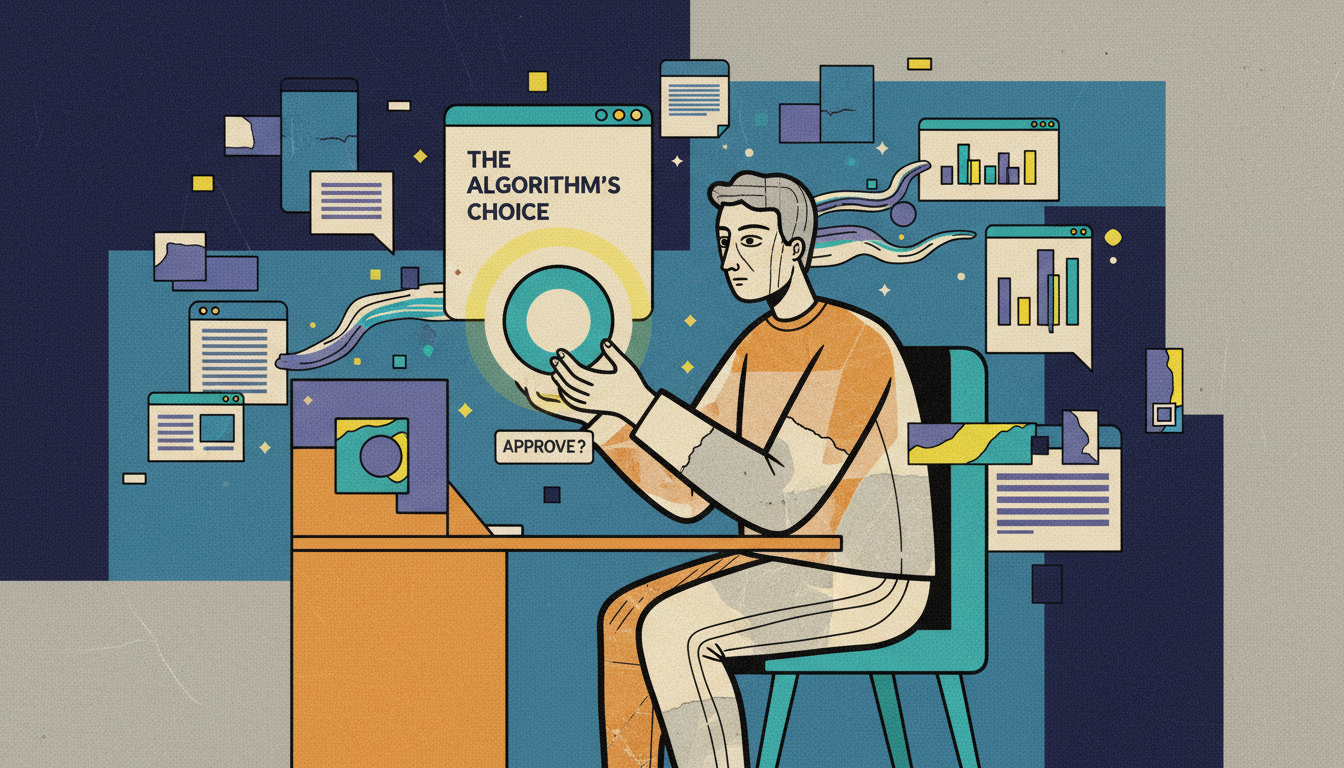
They call it the "human-in-the-loop" model. The AI can prepare an action. It can fill out the forms. It can queue up the payment. But it cannot pull the trigger. You must pull the trigger.
You must click approve. Why? Because an error in a chat is funny. An error in your bank account is a disaster.
Total autonomy is a myth right now. Controlled environments are the reality. Data stays on the device. Privacy remains intact. AI is your intern. It is not your boss.
This fear of autonomy is everywhere. OpenAI and Anthropic are terrified. They just restricted the release of a new cybersecurity tool. They are afraid of what bad actors might do. In Florida, they are even investigating if ChatGPT helped plan a crime. The stakes are life and death. The wild west is over. The sheriffs are in town.
2. The War of Open vs. Closed
Here is the biggest shock of the day. Meta changed the game. Then, they changed the rules.
We all loved Llama. It was open. It was free. It drove the whole industry forward. Meta was the champion of the open-source world.
Not anymore. Meet Muse Spark. It is Meta's newest creation. It is natively multimodal. It thinks. It contemplates. It crushes healthcare benchmarks. But you cannot have it.
It is locked tight. It is completely proprietary. No open weights. No free downloads. Why the sudden shift? Follow the money.

Meta spent 14.3 billion dollars. They tore down their stack. They rebuilt it from scratch. They want to win the AI race. They want to beat Google. They want to beat OpenAI. You do not give away a 14 billion dollar weapon.
But across the street, IBM is shaking its head. IBM says Meta is making a mistake. IBM looks at enterprise users. Businesses do not want black boxes. They want transparency.

If AI is going to run a global supply chain, you must see the code. You must know how it thinks. Opaque AI creates bottlenecks. It causes massive compute cost overruns.
IBM argues that open-source is essential for operational resilience. Who is right? They both are. Meta is fighting for consumer dominance. IBM is fighting for enterprise trust. The market will split in two.
3. When Theory Meets Reality
In a lab, AI is perfect. In the real world, AI breaks. Look at the data scientists dealing with MLOps.
We used to think AI models slowly forget things. Like humans. We tried to fit them to the Ebbinghaus forgetting curve. It failed miserably. The data was worse than a flat line.
Models do not slowly forget. They get shocked. Real-world data suddenly changes. A new fraud tactic appears. The model breaks instantly. Retraining your model every Tuesday is useless. Calendar-based schedules fail. You need real-time shock detection. You must adapt instantly.

Speaking of calendars, look at Power BI and Fabric Tabular models. Microsoft gave us custom calendars. It sounded amazing. But reality is messy.
Try calculating the "Previous Month" when months have different lengths. It breaks. Try comparing a leap year to a normal year. Your data shifts by one day. It ruins the math. Try mixing weekly logic with monthly logic. It crashes. Small details matter. In data science, a one-day shift is a million-dollar error.
We also see reality clash with theory in voice cloning. Mistral released Voxtral-4B-TTS. It is an amazing voice model. But they hid the audio autoencoder. They did not want you cloning any voice you want.
They tried to lock it down. But developers are smart. A researcher used a gradient descent approach. They pushed data backward. They reconstructed the acoustic and semantic tokens. They bypassed the lock. You cannot easily hide math. The community will always find a way.
4. The Power of Words
Technology is not just about code. It is about human psychology. It is about the words we use.
Look at Moderna. They are doing incredible work with Merck. They are using mRNA technology. They map a patient's cancer cells. They package the genetic code into a shot. They teach the immune system to kill the cancer.
It is brilliant. It halves the death rate for severe skin cancer. Mechanistically, it is a vaccine. It works exactly like the COVID-19 vaccine. But do not call it that.

If you say the V-word, their PR team will stop you. They call it an "individualized neoantigen therapy." Why? Because of politics. Because of fear.
Vaccine skepticism is at an all-time high. Government officials are hostile. Contracts are being canceled. To save their cancer cure, Moderna had to change its name. They had to distance it from the fearmongering. Innovation must survive public relations. Words can save lives. Or they can kill funding.
5. Super Tools for the Power User
While the giants fight over politics, the tools are getting insanely good. Google is quietly building super-assistants.
Look at NotebookLM. It is no longer just a note-taking app. It is a synthesis machine. You can now prompt it to revise single slides. You can export directly to PowerPoint. You can ingest whole digital books (EPUBs). You can even generate cinematic videos using Gemini 3 and Veo 3.
Then look at Google Antigravity. Everyone thought it was just for writing code. They were wrong. It is an autonomous beast. It is a research assistant.
You give it a task. It opens a browser. It clicks. It scrolls. It reads competitors' pricing pages. It builds a permanent knowledge base. It does not forget when you close the tab.
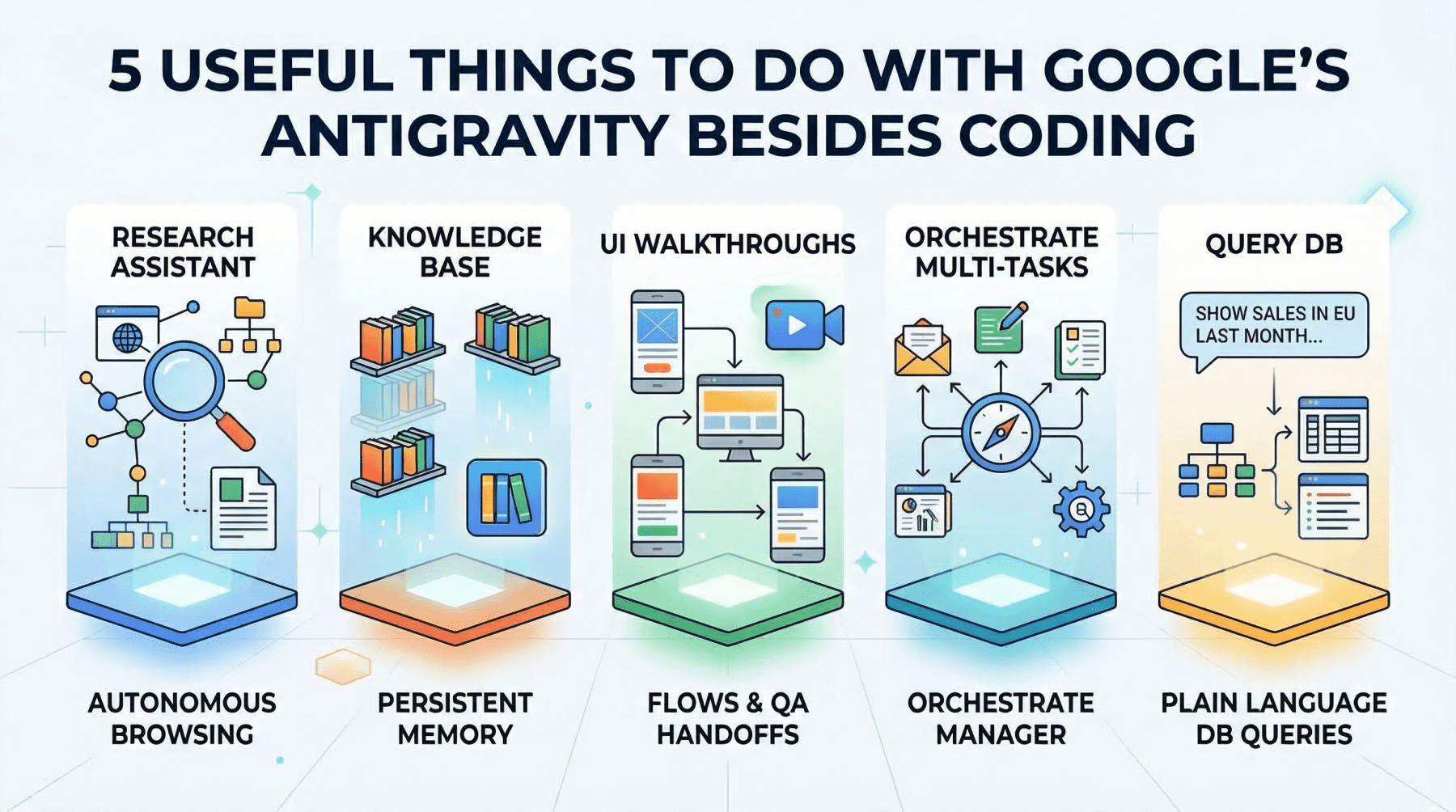
It can navigate your app and make a UI walkthrough video. It can query your massive SQL databases in plain English. And the best part? It does all this in parallel. You are no longer a worker. You are a manager of AI agents. Your productivity just went 10x.
6. AI Opens Its Eyes
Finally, we must talk about vision. AI is learning to truly see.
For years, AI looked at flat pixels. It did not understand space. Now, that is changing. Depth estimation is evolving. Geometric fusion is here. Foundation segmentation is combining with 3D understanding.

We call this spatial intelligence. The AI knows how far away the cup is. It knows the shape of the room. This is the missing link. This is what makes robots work in the real world.
China's Unitree is launching its R1 humanoid robot globally. Google DeepMind wants to automate drug design. Jeff VanderMeer writes stories about space wrecks. It all connects. AI is stepping out of the screen. It is entering our physical reality.
What It All Means
Let us summarize. What is the big picture today?
The era of unchecked AI is over. The era of governed AI has begun.
Companies are building walls. Meta closes its models. Apple limits its agents. OpenAI hides its security tools. They are afraid of what they have built. They are adding brakes to the car.
But at the same time, the tools are becoming magical. Antigravity does your research. NotebookLM builds your presentations. AI sees in 3D. Medical AI cures cancer, even if we must call it a therapy.
You do not need to fear the AI. But you must understand its limits. You must learn the new workflows. You must become the human in the loop.
The AI will do the heavy lifting. But you must click approve. You must steer the ship. The future belongs to those who manage the agents. Master the tools. Stay sharp. Stay in control.