April 19, 2026: AI needs a desk, RAG needs a filter, and humans still need Python
AI isn't magic—it's infrastructure. The 2026 reality: RAG fails with conflicting docs, agents need isolated worktrees, and Python fundamentals matter.
Today’s key AI stories
- RAG systems have a hidden blind spot. Feeding AI conflicting documents in the same context window causes confident but entirely wrong answers. The fix requires conflict-aware architecture, not a bigger model.
- Coding agents need physical space. Running AI coding tasks in your shared directory causes collisions. Git worktrees provide isolated workspaces for agents, though they come with a hefty setup tax.
- Python is still essential in 2026. A new learning roadmap emphasizes that developers must master core Python fundamentals to effectively orchestrate and manage AI tools.
Main topic
Let us talk about reality. AI is powerful. We all know this. But using AI in everyday work is surprisingly messy. We imagine a smooth process. We type a prompt. We get perfect results. The reality is quite different. The reality is friction.
Look at the news today. The industry is waking up to a tough truth. AI tools are acting like clumsy interns. They step on our toes. They get confused by conflicting instructions. They require massive setup time. The magic box is no longer magic. It is just software. And software needs infrastructure.
Consider the first major story today. It is about RAG systems. Retrieval-Augmented Generation. This is how we make AI read our private data. You give the AI a bunch of documents. It reads them. It answers your questions. It sounds foolproof.
But there is a massive hidden flaw. A new technical report exposes this blind spot. Imagine your RAG system pulls five documents. Three documents say one thing. Two documents say the exact opposite. What does the AI do? It panics. Well, it does not actually panic. It does something worse. It acts incredibly confident. It produces completely wrong answers.
This is a fascinating failure mode. The system retrieved the right data. The documents were correct. The context window was large enough. But the conflicting information breaks the logic of the model.

The authors provided a massive experiment to prove this. They shared a large dataset. They showed exactly how the AI fails. Most people think the solution is a smarter model. They think they need more expensive GPU power. They think they need a new API key.
They are wrong. The solution is much simpler. It requires no extra models. It requires no extra hardware. It requires conflict-aware RAG architecture. You must teach the system to recognize contradictions before it generates an answer. You must clean the data pipeline. You cannot just dump raw text into a model and expect brilliance. The model is only as smart as its filing system.
This brings us to our second story. It is about coding agents. The tools that write software for us.
You start a refactoring task. You ask your AI agent to change the codebase. You know it will take twenty minutes. What happens next? You sit there. You stare at your screen. You scroll on your phone. You are terrified to touch your keyboard.
Why? Because you are sharing a working directory. If you fix a tiny typo in another file, you might break the AI. The agent will see your change. It will get confused. It might delete your work. It might revert the file.
This is a physical constraint. A working directory holds exactly one train of thought at a time. Two entities cannot edit the same folder simultaneously. Not without colliding. Prompts do not fix this. Tighter scopes do not fix this.
You need a second desk.

This is where an old Git feature comes into play. Git worktrees. A worktree is a second window into your project. It sits in a different folder. It locks to a different branch. But it shares the same underlying database.
You ask Git to create a new folder. You put the AI inside that folder. Now the agent has its own desk. You can work on the main branch. The agent works on the feature branch. You do not step on each other.
This sounds perfect. But there is a catch. There is always a catch.
We call it the setup tax. A new worktree is completely empty of ignored files. Your node modules are missing. Your environment variables are gone. Your build caches are completely empty. Your app will not start.

If you run a modern project, this is a nightmare. It takes ten minutes just to copy environment files. It takes time to install dependencies again. The tools you need are back at your main desk. Someone has to carry them over.
How do we fix this? Some people write bash scripts. Bash scripts are boring but reliable. They copy files perfectly. But scripts are dumb. They cannot name a branch. They cannot read plain English.
Some people try to make the AI do the setup. They write a custom skill. But AI is bad at deterministic file copying. It makes mistakes. It hallucinates paths.
The right answer is a hybrid approach. Use a dumb bash script for the heavy lifting. Use the smart AI agent to configure the script. Let the agent read your prompt. Let the agent pick the branch name. Let the script copy the files.
This is the essence of modern AI workflow. Combine smart reasoning with dumb automation.
We are giving AI its own desk. We are filtering its documents. We are building systems to manage it. This changes the job of a developer. You are no longer just a coder. You are an orchestrator.
This is why our third story is so important. A new comprehensive guide outlines how to learn Python for data science in 2026.
Many beginners ask a logical question. If AI can write code, why should I learn Python? Why should I spend months studying loops and data types?
The answer is simple. You cannot orchestrate what you do not understand.

The guide breaks down a brutal reality. AI will write the bulk of your scripts. But when the script fails, the AI cannot always fix it. You have to read the code. You have to debug the logic. You have to understand the architecture.
Learning Python fast today requires focus. You do not need to memorize every library. You need to understand the fundamentals. Variables. Control flow. Classes. These are the building blocks.
Then you move to the essential packages. NumPy. Pandas. Matplotlib. Sci-Kit Learn. These are the tools of data science. You must know how they fit together.
The guide emphasizes project based learning. Do not just read tutorials. Build something real. Set up a cloud environment like AWS. Learn how package managers work. Understand Git.
Yes, you still need to learn Data Structures and Algorithms. The guide recommends specific resources for this. Why? Because algorithms teach you how to think. They teach you how to evaluate efficiency. AI will give you five different ways to solve a problem. You need the algorithm knowledge to pick the best one.
What it means
Let us step back and look at the whole board. We have three stories today. RAG failures. Git worktrees. Learning Python.
On the surface, they seem unrelated. One is about database retrieval. One is about version control. One is about learning a programming language.
But underneath, they tell the exact same story. They tell the story of the Great AI Reality Check of 2026.
A few years ago, we thought AI would just do the work. We thought we would give it a prompt, and it would give us a finished product. We ignored the friction.
Now, we are hitting the physical limits of our systems.
Look at the RAG system again. It is a perfect metaphor for our current era. We have access to all the information in the world. Our models can process massive amounts of text. But when the information is messy, the model breaks. The model lacks human intuition. It cannot easily say that two documents contradict each other. It just pushes forward and guesses.
We have to build the intuition for it. We have to design conflict aware systems. This requires human engineering. It requires deep thinking about data pipelines.
Look at the Git worktrees. We thought AI agents would be like invisible helpers. They would just quietly fix bugs in the background. Instead, they are like eager, clumsy interns sharing our keyboard. They delete our work. They get confused by our typos.
We had to dig into an old version control feature just to give them space. We had to build custom bash scripts just to set up their environments. We are spending our time building offices for our AI workers.
This is the new economy. Building offices for AI.
And this is why learning Python remains crucial. You cannot build a conflict aware RAG pipeline if you do not know Python. You cannot write a custom setup script for an AI agent if you do not understand file systems. You cannot review an agent code if you do not know data structures.
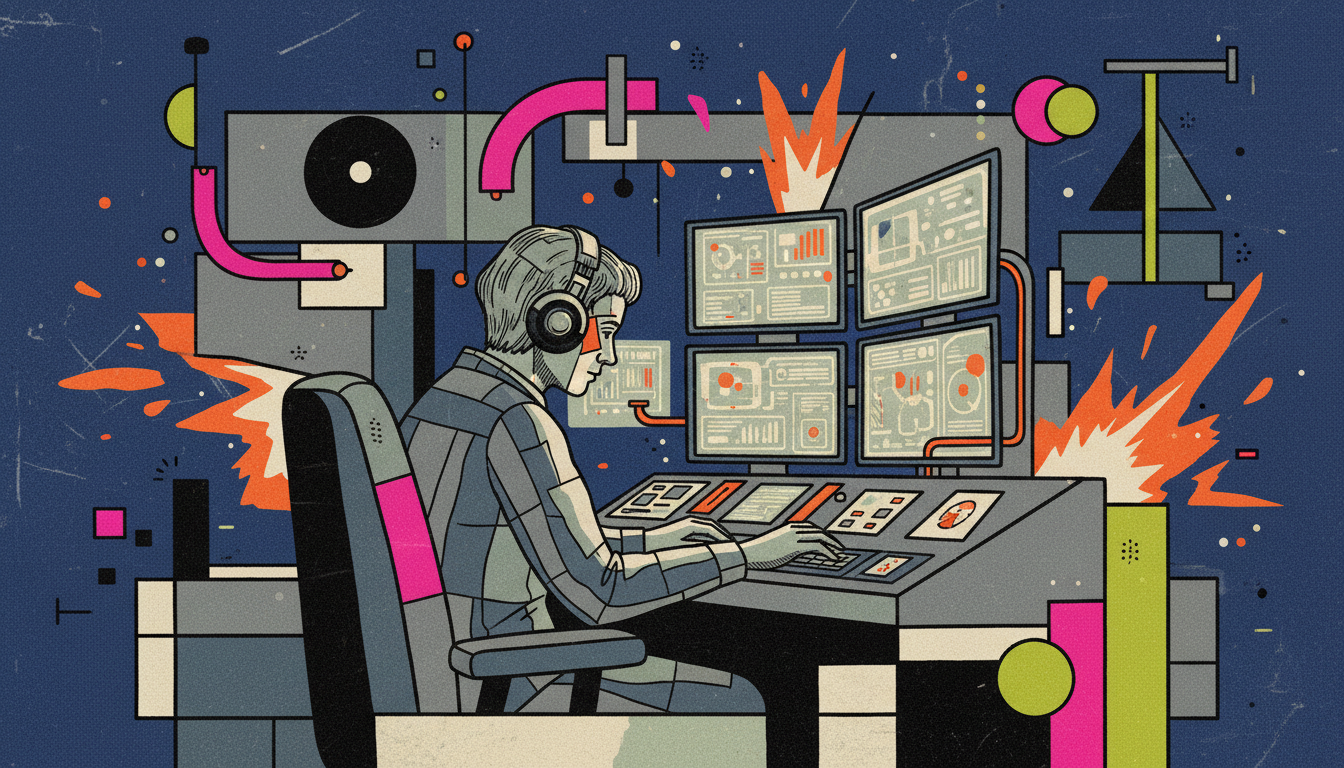
The role of the human has shifted. We moved from the assembly line to the control room.
But the control room is highly technical. You need to read the dials. You need to pull the levers. You need to know exactly how the machine works.
If you try to manage AI without understanding the fundamentals, you will fail. The AI will generate wrong answers. The agents will overwrite your files. You will drown in setup taxes.
What does this mean for your career? What does this mean for your business?
It means you must stop treating AI like a magic spell.
Start treating AI like a mechanical component. A very powerful, slightly unpredictable engine.
If you buy a massive engine, you do not just drop it into a wooden cart. The cart will break. The engine will tear it apart. You need to build a strong chassis. You need to install heavy duty brakes. You need a better steering wheel.
Your data infrastructure is the chassis. If your documents are full of contradictions, your RAG system will crash. You must clean your data. You must build better retrieval filters.
Your development environment is the brakes. If you let an agent roam free in your main directory, it will cause chaos. You must isolate it. You must use worktrees. You must automate the setup tax.
And your personal knowledge is the steering wheel. If you do not know Python, you cannot drive. You will just be a passenger. A passenger trapped in a car going very fast in the wrong direction.
The winners of 2026 will not be the people with the best prompts. The winners will be the system builders.
The people who know how to set up the desk. The people who know how to filter the noise. The people who took the time to learn the raw, difficult fundamentals.
The magic is over. The engineering has begun.