February 17, 2026: AI Is No Longer An Experiment. It's Your New Co-worker.
AI is no longer a toy; it's your new co-worker. Discover how AI agents are transforming industries and raising critical questions about ethics and human identity.
Today’s key AI stories (one line each)
- Feature Stores: Companies are building specialized data 'pantries' to feed AI reliable, high-quality information.
- Agentic Commerce: Debenhams and PayPal are testing AI 'agents' that let you shop via conversation, no website needed.
- Enterprise AI: Major banks like NatWest are using AI to automate tasks, saving tens of thousands of employee hours.
- Blazing-Fast AI: New chips from Groq and Cerebras are making AI so fast it can interact in real-time, like a human.
- Personalized AI: A musician with ALS used AI to recreate his singing voice, showing its deeply human potential.
- DIY AI: It's now possible for anyone to build their own private AI hub at home, ensuring data privacy and control.
- Scientific Discovery: AI is helping scientists scan the DNA of extinct animals like mammoths to find new life-saving antibiotics.
- Future of Work: Zoom and Shure are embedding AI into collaboration tools to make meetings more creative and productive.
AI's Quiet Revolution: It's Your New Co-worker Now
For the last few years, AI felt like magic. A toy. It could write a poem. It could create a strange image. We were all amazed. But that era is ending. A new one has begun. AI has left the lab. It is quietly showing up for work. It's not about magic tricks anymore. It’s about getting real work done. This change is happening across three major fronts. First, the infrastructure is getting serious. Second, AI is becoming an 'agent' that works for you. Third, this is forcing us to answer deeply human questions.
Part 1: The New Engine Room
Every revolution needs an engine. The industrial revolution had the steam engine. The internet revolution had servers and fiber optics. The AI revolution is building its engine right now. It is made of three key parts: order, speed, and access.
First, order. AI models are hungry. They need vast amounts of data. But messy data leads to bad results. This is a huge problem for businesses. Uber faced this years ago. They called it a 'data pipeline jungle.' Their solution was something called a 'feature store.' Think of it like a perfectly organized pantry for a master chef. Each ingredient (a 'feature') is labeled. It's fresh. It's consistent. The chef knows exactly what they're getting. A feature store does this for AI. It provides a single source of truth for data. This ensures the AI's decisions are reliable. It’s the boring but essential plumbing that makes professional AI possible.
Second, speed. For AI to feel intelligent, it must be fast. Waiting 30 seconds for an answer feels like talking to a slow computer. Waiting less than a second feels like a conversation. Companies like Groq and Cerebras are obsessed with this. They are building new kinds of chips. Not GPUs, but LPUs (Language Processing Units). Their goal is to slash latency. That's the time it takes for the AI to start 'talking.' Groq gets this down to under 0.2 seconds. This speed changes everything. It makes real-time, interactive AI possible. It’s the difference between sending a letter and having a phone call. This speed is what allows an AI to become a true 'agent.' It can react, respond, and act in the moment.
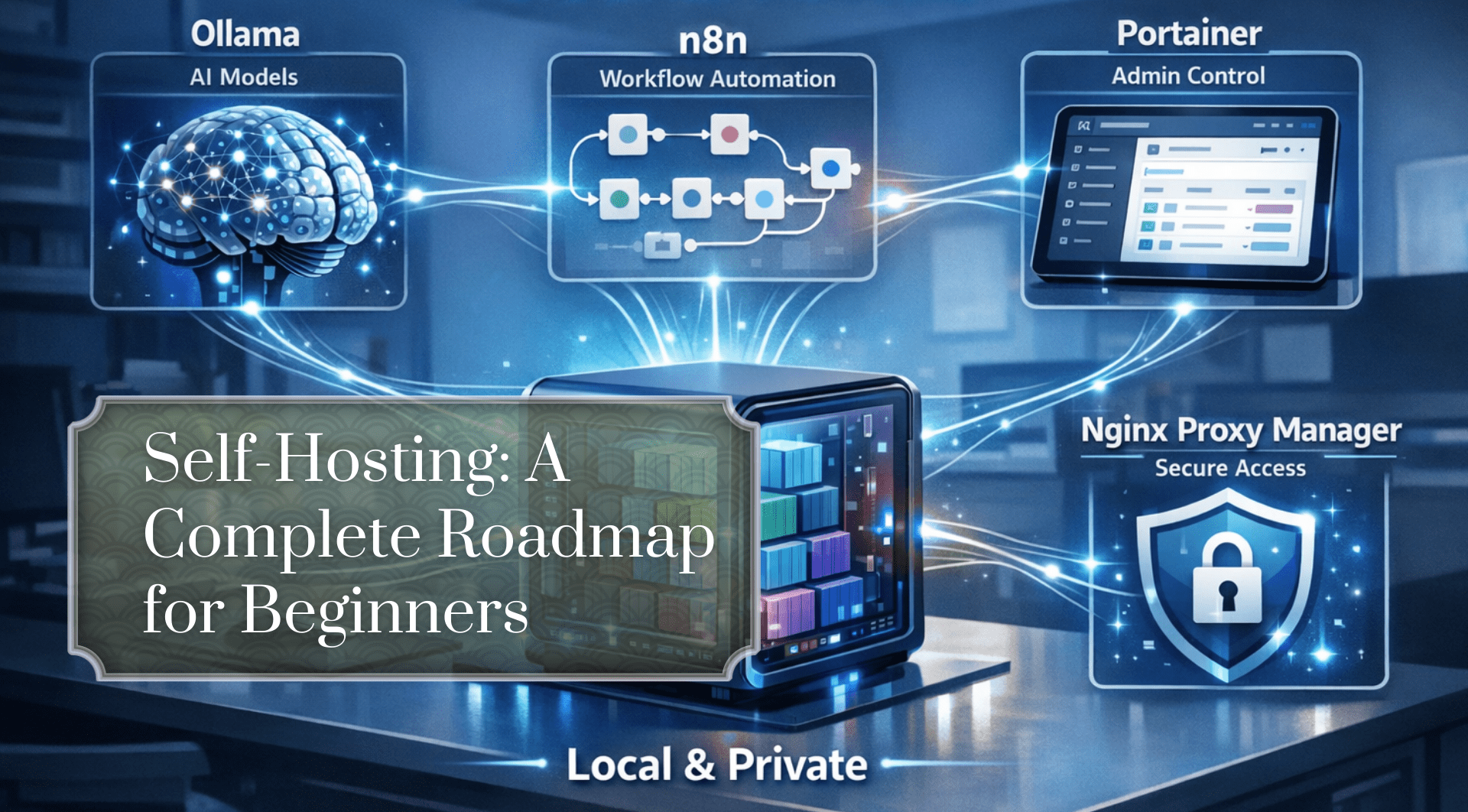
Third, access. For a long time, powerful AI was only for big tech. It required massive data centers. That is changing. A guide for beginners shows how to build your own private AI hub. You can do it at home. Using tools like Docker and Ollama. You can run powerful models on your own machine. Your data stays private. You don't pay monthly fees. This is a huge shift. It's the democratization of AI. It’s like moving from mainframe computers to personal PCs. When powerful tools become accessible to everyone, innovation explodes.
Part 2: The Rise of the Agents
With this new engine in place, the nature of AI is changing. We are moving from AI as a 'tool' to AI as an 'agent.' What's the difference? A hammer is a tool. You must swing it. A carpenter is an agent. You tell him what to build. He figures out how to do it. AI is becoming the carpenter.
Look at what Debenhams is doing with PayPal. They are testing 'agentic AI commerce.' A shopper in the PayPal app can just type a request. 'Find me a blue dress from PrettyLittleThing under $50.' An AI agent understands this. It asks clarifying questions. It finds the item. It uses your saved payment and shipping info. The entire purchase happens inside the chat. You never visit a website. The agent does all the work. This is not search. It is a conversation. It's a personal shopper in your pocket.

This isn't just for shopping. It's happening inside big companies. NatWest, a major bank, is using AI agents everywhere. Its chatbot, Cora, is now an agentic financial assistant. Customers can ask complex questions about their spending. Internally, AI agents are writing call summaries. They are drafting responses to complaints. This saved over 70,000 hours of staff time. In its wealth division, AI summarizes client documents. This gives advisors 30% more time to spend with clients. The AI is doing the administrative busywork.
The retailer URBN (Urban Outfitters) is doing something similar. They are using AI agents to write weekly sales reports. Instead of merchants digging through 20 different spreadsheets, an agent synthesizes everything. It delivers one clear summary. Staff focus on making decisions, not gathering data. The agent handles the preparation. This is a fundamental shift in workflow. AI is moving from being an assistant to an executor.
This agentic shift is also becoming invisible. In an interview, executives from Zoom and Shure explained their vision. AI isn't another app you open. It's a layer that improves everything. It makes audio crystal clear by removing background noise. It provides a smart summary after a meeting ends. You don’t think about the AI. You just have a better, more productive meeting. The technology fades into the background. It becomes a seamless partner.

Part 3: The Human Equation
This powerful, agentic AI is not just a business tool. It is having a profound impact on our lives. It raises new possibilities. And new, difficult questions. The challenge is no longer just technical. It's human.
First, the profoundly good. Musician Patrick Darling was diagnosed with ALS. He lost his ability to sing. But using AI trained on old recordings, he recreated his voice. He can now compose and perform music again, with his own AI voice clone. This is not about productivity. It's about restoring a part of someone's identity. It's about art and emotion.
In another case, scientist César de la Fuente is tackling antimicrobial resistance. This is one of the world's biggest health threats. His team uses AI to scan the genomes of extinct species. Like woolly mammoths and ancient sea cows. They are looking for ancient molecules with antibiotic properties. AI can analyze this vast library of genetic code. It can find patterns a human never could. This is 'molecular de-extinction.' It is a quest to find life-saving drugs hidden in the history of life itself. This is AI in service of humanity's biggest challenges.

But there is a complicated side. The same technology that gave Patrick Darling his voice back is causing conflict. A radio host is suing Google. He claims the company stole his voice for an AI app. This raises a new question: Who owns your voice? Can it be replicated without your permission? The law has no clear answers yet. These are ethical and legal frontiers we must now navigate.
Powerful tools also have a dark side. One story detailed the cybercrime subculture called 'the Com.' These are young, often teenage hackers. They cause chaos, steal money, and engage in vicious harassment. While the story wasn't strictly about AI, it's a reminder. The same ingenuity that builds helpful AI agents can be used to build malicious ones. As AI becomes more accessible, the potential for misuse grows. Cybersecurity researcher Allison Nixon hunts these criminals. Her work shows that behind every digital action, there is a human. With motivations we must understand.

We are at a turning point. AI is no longer a futuristic concept. It's a practical, operational reality. It’s being integrated into banking, retail, science, and our daily communication tools. The new infrastructure is making it robust. The shift to agents is making it powerful. But its ultimate impact is up to us. NatWest bank established an 'AI and Data Ethics Code of Conduct.' This is the path forward. We need rules. We need governance. We need to have a conversation.
The question is no longer 'What can AI do?' The question is 'What do we want it to do for us?'