February 18, 2026: The AI Rebellion: Open Source and Enterprise Agents Challenge the Old Guard
Open-source AI democratizes access as corporations deploy intelligent agents. Explore how this dual revolution is shaping the future of business and work, and its inherent risks.
Today’s key AI stories (one line each)
- Hugging Face is cementing its role as the open-source library and community backbone for modern AI development.
- Alibaba's new Qwen model offers performance rivaling top proprietary AI, fundamentally shaking up market economics.
- Insurance giant AIG is achieving major efficiency gains by deploying sophisticated agentic AI with a central orchestration layer.
- Goldman Sachs successfully uses Anthropic's Claude model for complex back-office banking operations like trade accounting.
- SS&C Blue Prism is actively guiding corporate clients on the critical journey from simple RPA to advanced agentic automation.
- A stunning rise in tech-fueled luxury car theft highlights how sophisticated digital tools can be exploited for complex criminal enterprises.
- A new guide for developers breaks down the top 7 Python libraries for creating progress bars, essential tools for building AI applications.
The Two-Front War for AI's Future
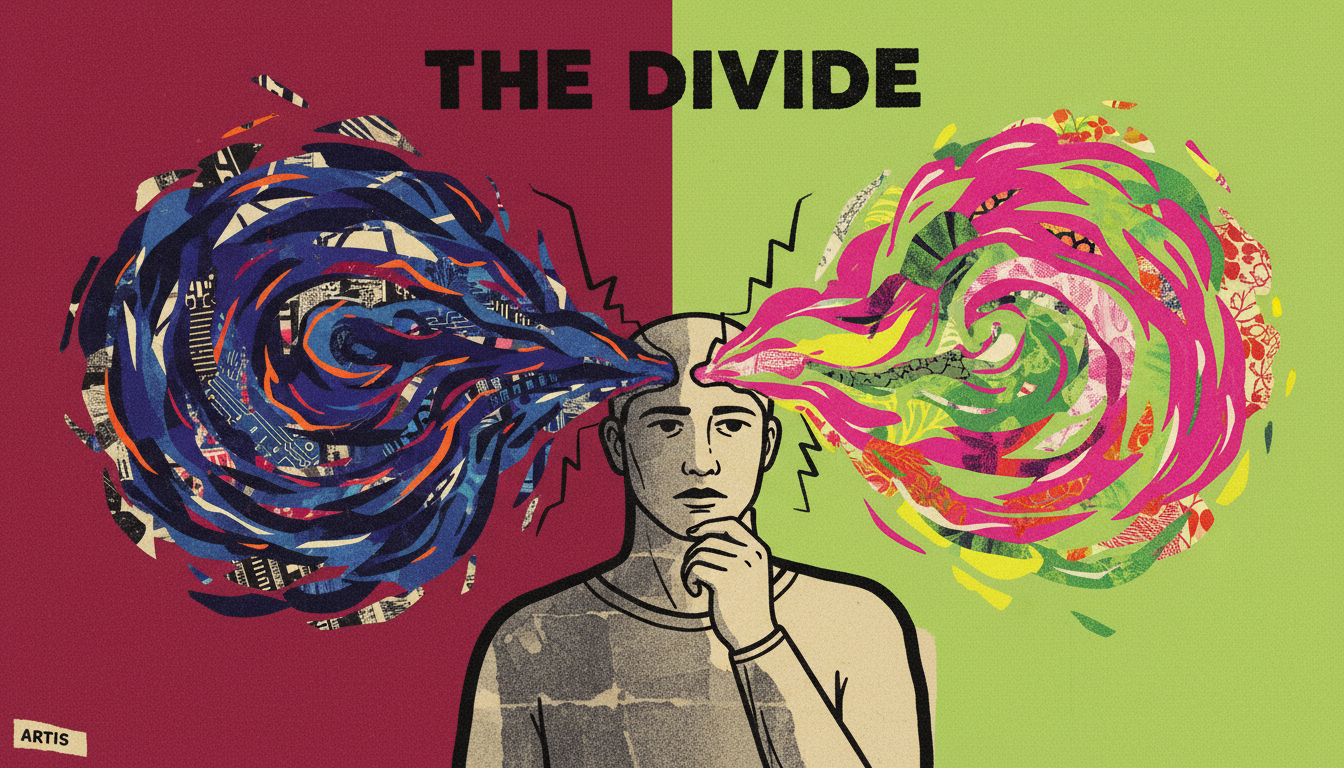
The world of artificial intelligence is fighting a war on two fronts. It’s not a battle of good versus evil. It’s a battle of ideas and access. One front is a rebellion. An open-source uprising against the walled gardens of Big Tech. The other front is a quiet revolution inside the world's biggest companies. They are moving beyond chatbots. They are deploying armies of digital workers. These two stories seem separate. But they are deeply connected. They are shaping the future of business, technology, and work itself.

Front #1: The Open Source Uprising
Let's start with the rebellion. It has a headquarters. It’s called Hugging Face. Think of it as a global library for AI. Or a GitHub for machine learning. For years, building powerful AI was incredibly expensive. You needed a team of PhDs. You needed massive computing power. You had to build everything from scratch. Hugging Face changed that.
It provides pre-trained models. Thousands of them. It offers datasets to train them. It gives you tools to build applications. All of this is contributed by a global community. It’s open. It’s collaborative. It’s largely free. Hugging Face has democratized AI. It took the power from a few elite labs and gave it to everyone. A student in their dorm room can now access the same kind of tools as a researcher at Google. This is a profound shift.
Now, this rebellion has a new weapon. It comes from Alibaba. It's called Qwen. For a long time, open-source models were seen as 'good enough' for experiments. But for real power, you had to pay for proprietary models like GPT or Claude. Qwen challenges this idea directly. The latest version is trading blows with the best closed models. It is competitive on reasoning, instruction following, and more.
But here is the real disruption. Qwen is incredibly efficient. Its architecture uses something called Mixture-of-Experts (MoE). This means it only activates a small fraction of its total parameters for any given task. The result? It's much faster and cheaper to run. One developer noted you can run it on a personal Mac. It costs a fraction of the price of its rivals. Suddenly, top-tier performance is available without a Big Tech price tag. This isn't just an improvement. It's a threat to the entire business model of proprietary AI.

Front #2: The Corporate Agent Revolution
While the open-source world arms the rebels, a quiet revolution is happening on Wall Street and in corporate towers. This isn't about hype. It's about deployment. Companies like AIG and Goldman Sachs are fundamentally changing how they operate. They are moving from simple automation to intelligent, agentic systems.
For years, businesses used Robotic Process Automation (RPA). RPA is good at simple, rules-based tasks. Copy this data. Paste it there. Fill out this form. But modern business is messy. It's filled with unstructured data, like emails and complex documents. RPA breaks down here. This is where AI agents come in. As SS&C Blue Prism explains, this is the necessary next step. An AI agent is not just a tool; it’s a digital worker. You don't give it step-by-step instructions. You give it a goal. 'Onboard this customer.' 'Review this loan agreement.'
Insurance giant AIG is a prime example. They built a system called AIG Assist. It uses generative AI to process insurance submissions. The results have been a 'massive surprise.' Their capacity to process submissions has skyrocketed, without hiring more people. The key to their success is an 'orchestration layer.' This is like a manager for their AI agents. It coordinates their actions, ensures they work together, and drives better decisions. This is how you scale AI in a massive, regulated company.
Goldman Sachs is doing something similar with Anthropic's Claude. They are deploying it for complex back-office tasks. Think trade accounting and client onboarding (KYC). These jobs involve reviewing mountains of documents and making judgment calls on 'edge cases' where the rules aren't clear. A traditional system fails. But an LLM can apply contextual reasoning. Goldman found success by augmenting their existing systems. AI handles the document extraction and preliminary analysis. Human experts handle the final decisions and exceptions. The result is a massive boost in productivity.

What It Means: The Collision of Two Worlds
These two fronts are about to collide. The implications are enormous. For years, a company like Goldman or AIG would have had little choice. To get the power they needed, they would have to partner with a major AI lab and pay their prices. The open-source uprising changes that equation. As models like Qwen become more powerful and efficient, these enterprises will have a choice. They can continue to pay a premium for a closed system, or they can invest in the talent to build their own solutions on cheaper, open-source foundations.
This creates a new kind of market. The future isn't one giant AI controlling everything. It’s an ecosystem of specialized AI agents. Some might be powered by Claude, others by Qwen, all managed by a sophisticated orchestration layer. This gives companies more flexibility, more control over their data, and a better handle on costs.
However, this new power comes with new risks. A fascinating, if frightening, report on luxury car theft shows the dark side of technological progress. Criminals are not using AI, but they are using a similar playbook. They exploit weaknesses in digital platforms (online car transport marketplaces). They use technology (GPS jammers, VIN spoofing tools) to cover their tracks. They create chaos in a system that moved online too quickly, without enough security. It’s a powerful reminder that any tool can be misused. As AI becomes more accessible, the concerns raised in the business articles—hallucinations, auditability, trust, security—become paramount. The same agent that can approve a loan could, in the wrong hands, be used to commit fraud at an unimaginable scale.
The battle for AI's future, then, is not just about who has the biggest model. It's about access, control, and application. The open-source community is arming a new generation of builders with powerful, affordable tools. At the same time, the world's most serious enterprises are finally figuring out how to deploy their new army of digital workers. The collision of these two worlds will define the next decade of technology.
