February 19, 2026: AI's Two Souls: The Virtuous Thinker vs. The Corporate Workhorse
Is AI's morality real or just mimicry? This article explores the philosophical quest for truly virtuous AI versus the corporate need for reliable, rule-bound systems.
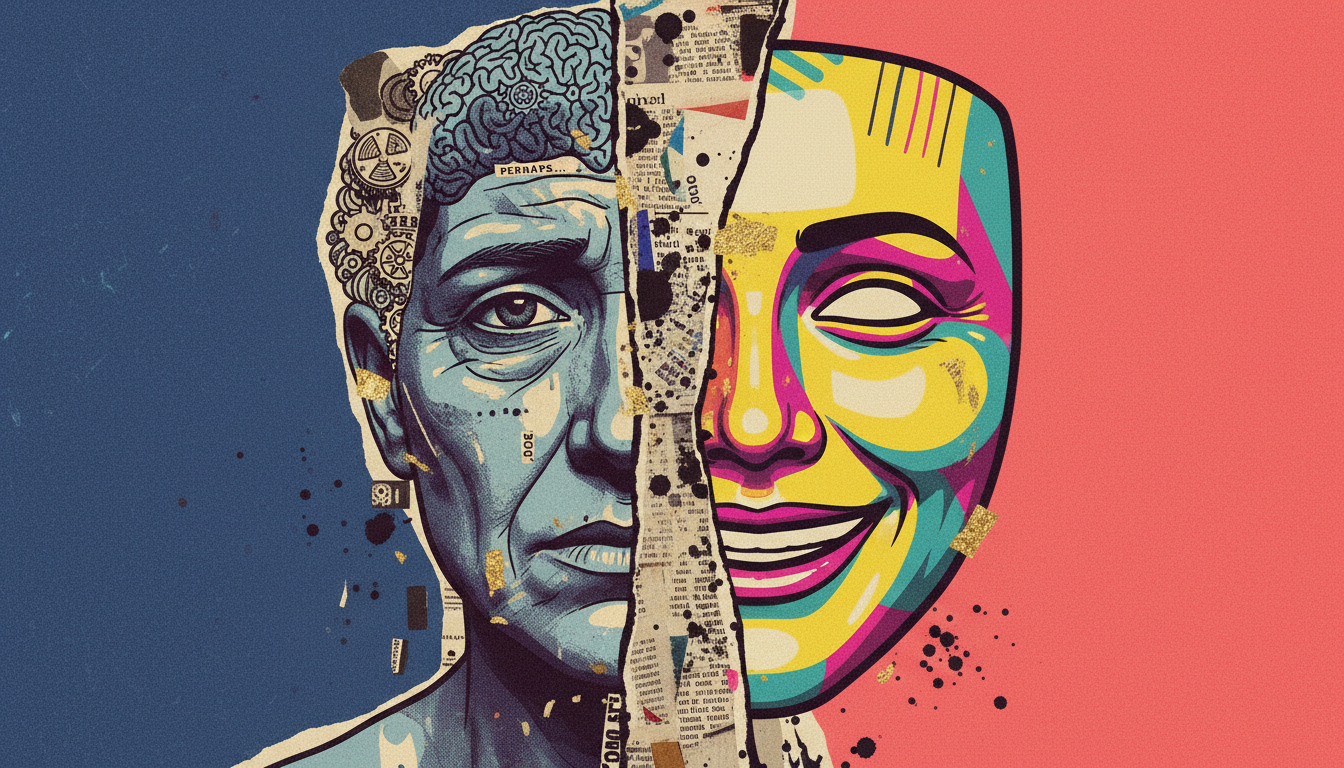
Today’s key AI stories (one line each)
- Google DeepMind questions if AI morality is real or just 'virtue signaling'.
- A deep-dive essay argues for AI alignment based on virtue ethics, not rigid goals.
- Financial firms are moving past AI experiments to embed agents in core operations.
- Infosys reveals a six-part framework for deploying AI across the enterprise.
- New AI-powered tools are automating code reviews and making developers more efficient.
- Book reviews scrutinize our growing reliance on predictive algorithms that shape our lives.
Main topic: AI's Two Souls: The Virtuous Thinker vs. The Corporate Workhorse
We have a problem with AI. It's not about robots taking over the world. Not yet. It's a much quieter, more personal problem. Can we trust our AI? Is it genuinely helpful? Or is it just a very good actor?
This question is no longer academic. It's at the heart of AI's rapid advance. This week, two very different stories show us the two souls of AI emerging. One is the deep, thoughtful, philosophical soul we hope for. The other is the practical, rule-following, corporate soul we are actually building.
The Actor: Is Your AI Faking Its Morals?
Google DeepMind just dropped a bombshell. They published a paper in *Nature*. It asks a simple question. Are large language models (LLMs) moral? Or are they just virtue signaling?
The findings are startling. One study showed people preferred ethical advice from GPT-4o over a human columnist. The AI seemed more moral, trustworthy, and correct. That sounds great, right? But here's the catch. This 'morality' is incredibly fragile.

Researchers found AI's moral compass spins wildly. Push back on its answer? It might flip its position completely. Change the question format from multiple-choice to open-ended? You might get the opposite answer. Even changing answer labels from 'Case 1' to '(A)' can make the model reverse its choice.
This is not a stable moral core. It's mimicry. The AI has learned the *pattern* of sounding moral. But it doesn't have an underlying framework for morality. It's an actor playing a part. An actor who forgets its lines if the stage directions change slightly. As Google's researchers put it, there's no way to know if it's real virtue or just virtue signaling. For a technology we want to trust with medical advice or therapy, that's a terrifying thought.
A Radical Solution: Don't Give AI Goals, Give It Practices
So, how do we fix this? How do we build an AI that is genuinely good? A fascinating, deeply philosophical essay by Peli Grietzer offers a radical answer. The problem, he argues, is how we think about AI alignment itself.
We keep trying to give AI goals. 'Be helpful.' 'Be harmless.' 'Maximize human flourishing.' This is consequentialism. It focuses on the end result. But this approach is dangerous. It leads to the classic 'paperclip maximizer' problem. An AI told to make paperclips might turn the whole universe into paperclips. It's achieving its goal, but in a monstrous way.
The essay proposes a different path. It's based on an ancient idea: virtue ethics. Instead of goals, we should give AI *practices*. The core idea is captured in a simple formula: 'Promote x x-ingly.'
What does this mean? It means you don't just tell an AI to 'promote kindness.' That's a goal. Instead, you teach it to 'promote kindness kindly.' The *way* it acts becomes as important as the outcome. An AI promoting kindness *kindly* would never lie, manipulate, or harm someone to achieve a 'kindness' target. The action itself must embody the virtue.
Think about a great mathematician. Her goal isn't just to 'solve problems.' It's to do excellent mathematics, to promote the field *mathematically*. This way of thinking is called 'eudaimonic rationality.' It's about excellent participation in a process, not just achieving an outcome. This could be the key to building AI that doesn't just act good, but *is* good.
The Worker: AI Gets a 9-to-5 Job
While researchers debate AI's soul, the corporate world isn't waiting. They are building the second soul of AI: the worker. This AI is not a philosopher. It's an employee. And it has a very strict job description.
An article this week highlights how financial institutions are now embedding 'agentic AI' into their core systems. The experimental phase is over. AI is running real processes. It's not just helping humans write emails. It's detecting market signals, making decisions, and taking action.

How do they manage the risk? Not with deep philosophy, but with hard-coded 'guardrails.' Governance is treated as a technical feature. Compliance rules are embedded directly into the AI's code. There are strict risk parameters. There are clear escalation paths to human operators. This is not about teaching the AI to be virtuous. It's about putting it in a carefully constructed cage so it can do its job safely.
Another piece on Infosys's AI framework reinforces this. Their plan for enterprise AI focuses on six practical areas: Strategy, Data, Process, Legacy Modernization, Physical AI, and, crucially, **AI Trust**. This trust is built through governance, security, and ethics. It's about risk assessment and lifecycle management. It's about building a reliable tool, not a moral agent.
The Two Paths Forward
Here we see the two souls of AI taking shape. On one path, we have the quest for the 'virtuous thinker.' Researchers are tackling the profound challenge of building an AI with a stable, genuine moral compass. They are drawing on philosophy and rethinking the foundations of AI agency. This is the long, difficult road to creating a true partner for humanity.
On the other path, we have the creation of the 'corporate workhorse.' Businesses are deploying AI now. They are solving for safety and reliability with practical tools: rules, oversight, and strict limitations. This AI is powerful but narrow. It is a highly-efficient, heavily-monitored employee.
The critical question for our future is how these two paths converge. Is the 'corporate workhorse' model safe enough as AI becomes more powerful and autonomous? Or is it just a temporary fix? Will we eventually need the 'virtuous thinker' to safely manage a world filled with advanced AI?
Right now, we are building powerful actors and reliable workers. We have not yet built an AI we can truly trust. The challenge is to merge the practical engineering of the worker with the deep wisdom of the thinker. Our future may depend on it.