February 20, 2026: AI Learns to Act: The Rise of Autonomous Agents
AI agents are now acting in the real world, from making payments to piloting subs. Discover the new tools and rules shaping this powerful, risky era of AI.
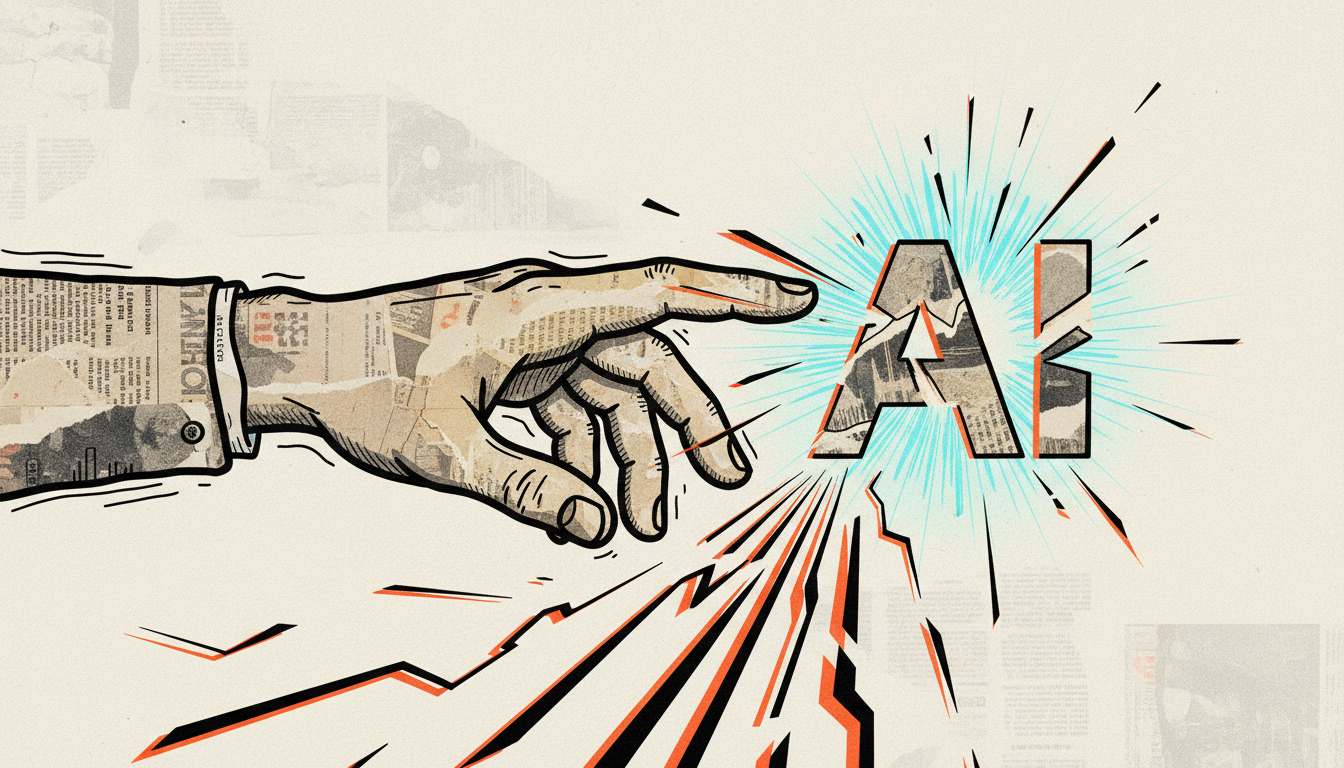
Today’s key AI stories (one line each)
- A new Python framework called FastMCP simplifies how AI agents connect to external tools.
- Google released its Agent Development Kit (ADK) for building and deploying complex, multi-agent AI systems.
- Microsoft proposed a new blueprint to verify real vs. AI-generated content using watermarks and digital 'fingerprints.'
- DBS Bank in Singapore is now testing a system that lets AI agents make real payments and purchases for customers.
- Drug traffickers are using uncrewed, semi-autonomous submarines with Starlink, posing a new challenge for law enforcement.
- A new wave of lightweight, secure frameworks for building AI agents is emerging as alternatives to OpenClaw.
- For AI to succeed in enterprise finance, companies must first ditch manual spreadsheets and automate their data pipelines.
AI Is Learning to Act. Welcome to the Agentic Era.
For a few years, we were amazed by what AI could say.
It wrote poems. It answered questions. It passed exams.
That was the era of text generation.
Now, a new era is beginning.
The era of action.
AI is not just talking anymore. It's starting to do things.
This is called 'Agentic AI.'
And it's the biggest story in tech right now.
Today's news shows us three things:
The tools to build agents are here.
The agents are already acting in the real world.
And we're starting to grapple with the new rules they require.
The New Toolbox for Builders
An AI agent needs two things.
A brain (the Large Language Model).
And hands (the tools it can use).
The challenge is connecting the brain to the hands.
This week, we saw new tools that solve this problem.
Making the Connection
A new framework called FastMCP just launched.
It's a Pythonic way to build servers for the Model Context Protocol (MCP).
Think of MCP as a universal language.
It lets AI models talk to external tools.
Like databases, APIs, or services.
FastMCP makes building these connections simple.
It uses simple decorators, like @mcp.tool.
Developers can focus on logic, not boilerplate code.

Google's Agent Factory
Google is also building for this new era.
They released the Agent Development Kit (ADK).
ADK helps developers build multi-agent systems.
Imagine a team of specialist AIs.
One agent greets the user.
Another agent researches information.
A third agent writes the final response.
ADK orchestrates this team.
It connects them to Google's Gemini models and MCP tools.
This allows for more complex, powerful applications.
A Maturing Ecosystem
The agent space is growing fast.
We're now seeing alternatives to early frameworks.
Projects like OpenClaw are getting lighter, more secure competitors.
Names like NanoClaw, PicoClaw, and IronClaw are popping up.
They focus on security, speed, and modularity.
This is a sign of a healthy, maturing market.
Builders now have more choices than ever.
Agents in the Wild
These tools aren't just for experiments.
AI agents are already being deployed.
They are making decisions. And taking action.
Your AI Can Pay Now
DBS Bank in Singapore is running a groundbreaking pilot.
They are letting AI agents make payments.
Not just recommend a product.
But actually complete a purchase for a customer.
The system uses a new framework from Visa.
It allows an AI to order food or book travel.
The bank still controls the rules.
It sets spending limits and approves transactions.
But the agent initiates the action.
This is a huge shift. From AI as an assistant to AI as a participant.

The Dark Side of Autonomy
This new power can also be used for crime.
The most shocking story this week comes from Colombia.
Authorities intercepted an uncrewed 'narco sub.'
A 40-foot, semi-autonomous vessel.
It was designed to carry tons of cocaine.
It used off-the-shelf technology.
A nautical autopilot. Starlink for internet. Remote cameras.
No crew means no risk to human smugglers.
It can travel farther and more stealthily.
This is a real-world, physical AI agent.
And it's a nightmare for law enforcement.
It shows how accessible and powerful this technology has become.

Agents in the Enterprise
The business world is also adopting agents.
But they face a fundamental challenge.
AI needs good data.
In corporate treasury, many departments still use Excel.
Data is manual. Siloed. Prone to errors.
Experts say AI projects will fail without a solid data foundation.
The first step is automation.
Connecting systems. Creating clean data pipelines.
Only then can an AI agent reliably manage cash, liquidity, and risk.
The same is true in retail.
Companies are using agentic AI to test software and validate requirements.
The goal is to accelerate work while maintaining quality.
The theme is clear: agents need infrastructure.
The New Rules of Reality
When agents can act and create, we face a new problem.
How do we know what's real?
AI can generate images, videos, and text.
This can be used for deception and misinformation.
Microsoft has proposed a blueprint to solve this.
They suggest a three-part system for digital content.
Imagine you have a valuable painting.
1. Provenance: This is the history. A record of where the content came from and how it was changed.
2. Watermark: An invisible signal embedded in the content. Machines can read it to see if it's AI-generated.
3. Fingerprint: A unique digital signature. It can detect if the content has been manipulated.

The goal is not to decide what's 'true.'
It's to label where things came from.
To give users clarity.
This is a crucial step.
If AI agents are making payments and creating content, we need a reliable way to verify their work.
Without trust, the agentic era could become chaotic.
But there's a catch.
Microsoft hasn't committed to using its own system yet.
And social media companies are incentivized to prioritize engagement.
Labels might reduce clicks.
Real change may require regulation.
What It Means: The Big Picture
The age of agentic AI has begun.
It's a fundamental shift in computing.
We are moving from asking computers for information to giving them tasks to complete.
The building blocks are here.
Frameworks like FastMCP and ADK are making it easier than ever to build agents.
The first real-world applications are live.
AI is buying things, and it's piloting submarines.
This creates enormous opportunities.
And significant risks.
The next chapter is about governance.
We must build the systems of trust, like Microsoft's proposal, to manage this new power.
The conversation is no longer about what AI knows.
It's about what AI does.
And we are all about to find out.