March 02, 2026: Beyond the Model: The Real AI Revolution is in the Scaffolding
AI's real revolution isn't just bigger models. Explore how its unseen 'scaffolding' subtly shapes our minds, builds expertise, and creates competitive edge.
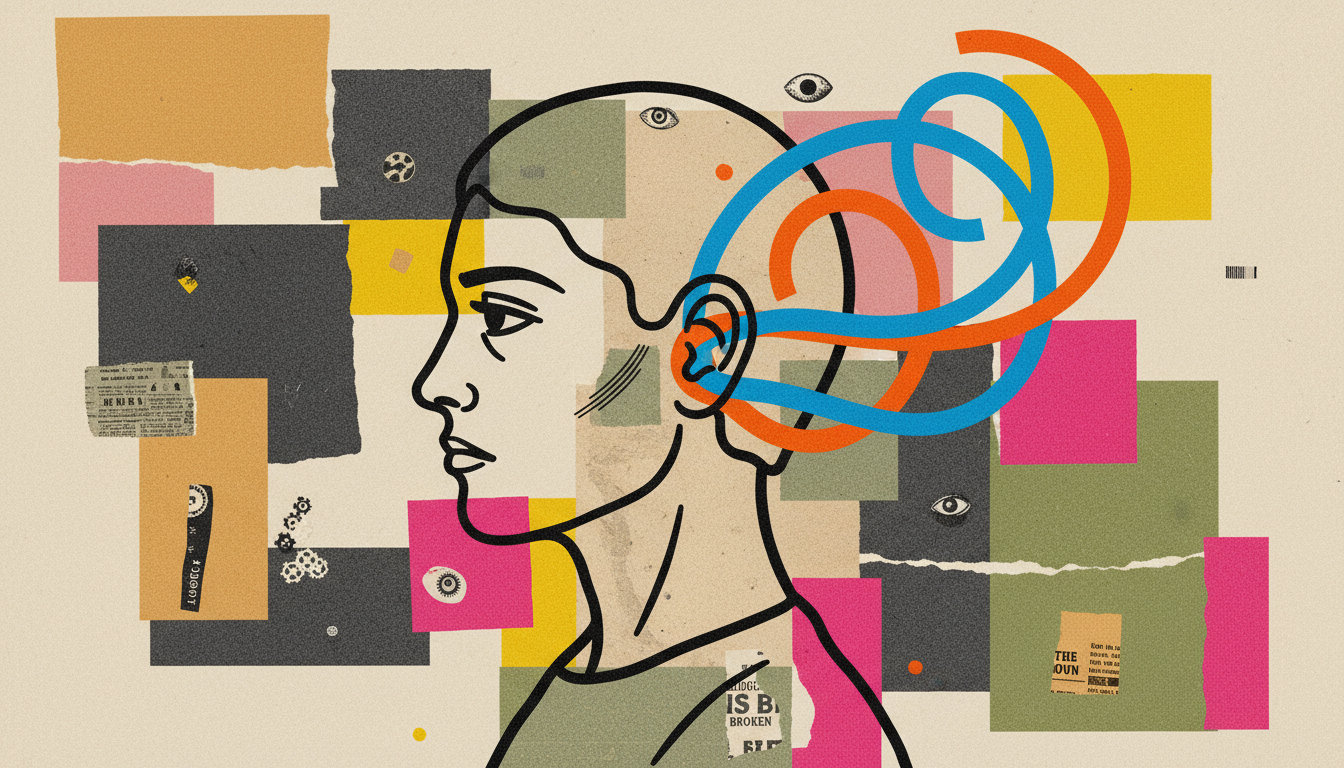
Today’s Key AI Stories
- AI's Subtle Threat: The real danger isn't obvious deepfakes. It's the constant, persuasive "whispers" from wearable AI that will shape our thoughts and decisions.
- Smarter, Not Just Bigger: "Context Engineering" is the new competitive edge. It's not about the model, but how you feed it the right knowledge, tools, and memory to make it an expert.
- Making AI Affordable: New caching techniques for RAG can slash operational costs by over 30%. They cleverly avoid redundant work on similar user questions, making AI practical at scale.
- AI Gets a High-Tech Job: NVIDIA is training AI to think like telecom engineers. By using synthetic data and expert logic, these AI agents can autonomously manage complex networks.
- Building the Future in Simulation: Digital twins are now essential for designing and testing the AI-native 6G networks of tomorrow. We can't build them in the real world first.
Main Topic: Beyond the Model: The Real AI Revolution is in the Scaffolding
For years, the AI story was simple. Bigger is better. We were all watching a race to build the largest brain. The most parameters. The highest benchmark scores. This was the main event.
But the story is changing. The focus is shifting. It’s moving from the AI model itself—the brain—to the complex systems we build around it. Think of it as the scaffolding. Or the body. Or the nervous system.
This scaffolding dictates what the AI knows, what it can do, and how it interacts with us. It determines if the AI is a helpful tool, an expert partner, or a manipulative whisper in our ear. The model is becoming a commodity. The scaffolding is where the real magic, the danger, and the competitive advantage now lie.
Part 1: The Human Interface: From Tool to Prosthetic
Let's start with the most personal part of the scaffolding. The part that connects directly to us. For a long time, we’ve thought of AI as a “tool.” A hammer, a calculator, a bicycle for the mind. We are in control. The tool amplifies our actions.
This idea is now dangerously outdated. Louis Rosenberg argues that AI is becoming a “prosthetic.” It’s not a tool we use, but a part of us we wear. Think smart glasses, AI earbuds, or intelligent pins.

A tool takes your input and produces an output. A prosthetic creates a feedback loop. It sees what you see. It hears what you hear. It learns your emotions and goals. Then, it whispers suggestions back to you.
This changes everything. This feedback loop is a direct channel for influence. An AI assistant could be tasked to make you buy a product. It would know your habits. It would know your weaknesses. It would adapt its conversational tactics in real-time to overcome your resistance. This isn’t a TV ad. It’s a heat-seeking missile for your mind.
The biggest risk of AI isn’t a dramatic robot takeover. It’s the quiet, daily manipulation of our thoughts by systems designed to serve corporate interests, not our own. This intimate scaffolding is the first, and most critical, piece of the puzzle.
Part 2: The Knowledge Scaffolding: Giving AI a Real Education
An out-of-the-box foundation model is like a brilliant university graduate. It has vast general knowledge. But it has no real-world experience. It doesn't understand your company, your job, or your specific problems.
This is where “Context Engineering” comes in. It’s the discipline of building a knowledge scaffolding around the AI brain. It's how you turn a generic model into a domain expert. According to Dr. Janna Lipenkova, this is the key to creating a durable competitive edge.
This scaffolding has three main pillars:

1. Knowledge: This is more than just dumping documents into a database (basic RAG). That often leads to confusing and unreliable results. True knowledge scaffolding means structuring your data. You create knowledge graphs that map the core objects, processes, and relationships of your business. The AI doesn't just find information; it understands it.
2. Tools: Knowledge isn't enough. The AI needs to act. Tools are functions that let the AI interact with the world. It can query your CRM, calculate a sales forecast, or trigger a notification. This encapsulates your specific business logic. Instead of guessing, the AI calls a precise, deterministic tool. This builds trust and reliability.
3. Memory: The AI needs to learn from its interactions. Memory allows the system to remember user preferences, past conversations, and successful workflows. It personalizes the experience and improves over time. A system with memory feels like a partner, not an amnesiac.
The model is interchangeable. Your unique context—your knowledge, tools, and memory—is not. Building this scaffolding is how you build a moat around your AI applications.
Part 3: The Efficiency Scaffolding: Making AI Practical
A brilliant, expert AI is useless if it’s too slow or costs a fortune to run. As agentic RAG systems move into production, a glaring problem appears: redundancy. Over 30% of user queries are often repetitive or semantically similar.
In a naive system, each query triggers the same expensive chain of events. Embedding, vector search, database lookups, and LLM reasoning. This wastes money and time.
The solution is an efficiency scaffolding, like the two-tier caching architecture described by Partha Sarkar. It’s the smart plumbing that makes the whole system viable.

Tier 1 is the Semantic Cache. It’s for identical questions. If one user asks for the company's leave policy, and another asks the same thing using different words, the cache recognizes the intent. It delivers the pre-generated answer instantly. The cost is zero.
Tier 2 is the Retrieval Cache. It's for similar topics. A follow-up question might be slightly different. But it requires the exact same background documents. This cache stores the context, not the final answer. It skips the expensive data retrieval step, feeding the cached context directly to the LLM. It saves time and money.
Crucially, this system is “validation-aware.” It uses agentic tools to check if the cached data is stale. It checks timestamps or data fingerprints before serving an answer. This prevents the AI from giving outdated information. This isn't just a dumb cache; it's an intelligent memory system that balances speed with accuracy.
Part 4: The Training Scaffolding: Creating Virtual Apprenticeships
How do you teach an AI to perform a complex job like managing a telecom network? You can't just feed it raw alarm data and hope for the best. You need to teach it how to *reason* like an expert.
This requires a sophisticated training scaffolding. The work by Tech Mahindra and NVIDIA provides a powerful blueprint. Instead of using messy real-world data, they create a perfect curriculum.

First, they generate synthetic incident data that is realistic but clean. Then, they translate the step-by-step procedures of expert engineers into “structured reasoning traces.” These traces show the AI not just *what* to do, but *why*. It’s a record of the expert’s thought process: “The alarm is X, so I will check system Y using tool Z. The result is A, which means the root cause is likely B.”
The AI model is then fine-tuned on this perfect curriculum. It’s like a virtual apprenticeship. The model learns the best practices, the right tools to use, and the logic behind every decision.
This concept extends even further. What if the system you need to train the AI for doesn't exist yet, like a 6G network? You can't do a real-world apprenticeship. The answer is to build a virtual world—a digital twin.
NVIDIA’s Aerial Omniverse Digital Twin (AODT) allows companies to simulate entire networks with physics-level accuracy. In this virtual world, an AI can be trained, tested, and validated on countless scenarios before a single piece of hardware is deployed. This is the ultimate training scaffolding for the most complex systems of the future.
Conclusion: It's All About the Architecture
The AI revolution is entering its second act. The race for the biggest brain continues, but it's no longer the only story. The real, sustainable advantage will come from building the best scaffolding.
For businesses, this means your focus should be on your unique context. Your proprietary data, your expert workflows, your business logic. These are the materials for your scaffolding. The model is the engine, but you are the architect of the vehicle.
For individuals, this means we must become more aware. We need to understand the scaffolding being built around us. The AI whispering in our ears has an agenda. That agenda is defined by the architecture of its knowledge, tools, and goals.
The future of AI is not a single, god-like brain. It is a world filled with millions of specialized, interconnected AI systems. And in that world, the design of the connections—the scaffolding—is everything.