March 03, 2026: AI's Two-Front War: The Race for Efficiency and the Battle for Its Soul
Powerful AI is now small enough for laptops, revolutionizing business. Yet, its growing reach sparks intense debate on ethics, military use, and future control.
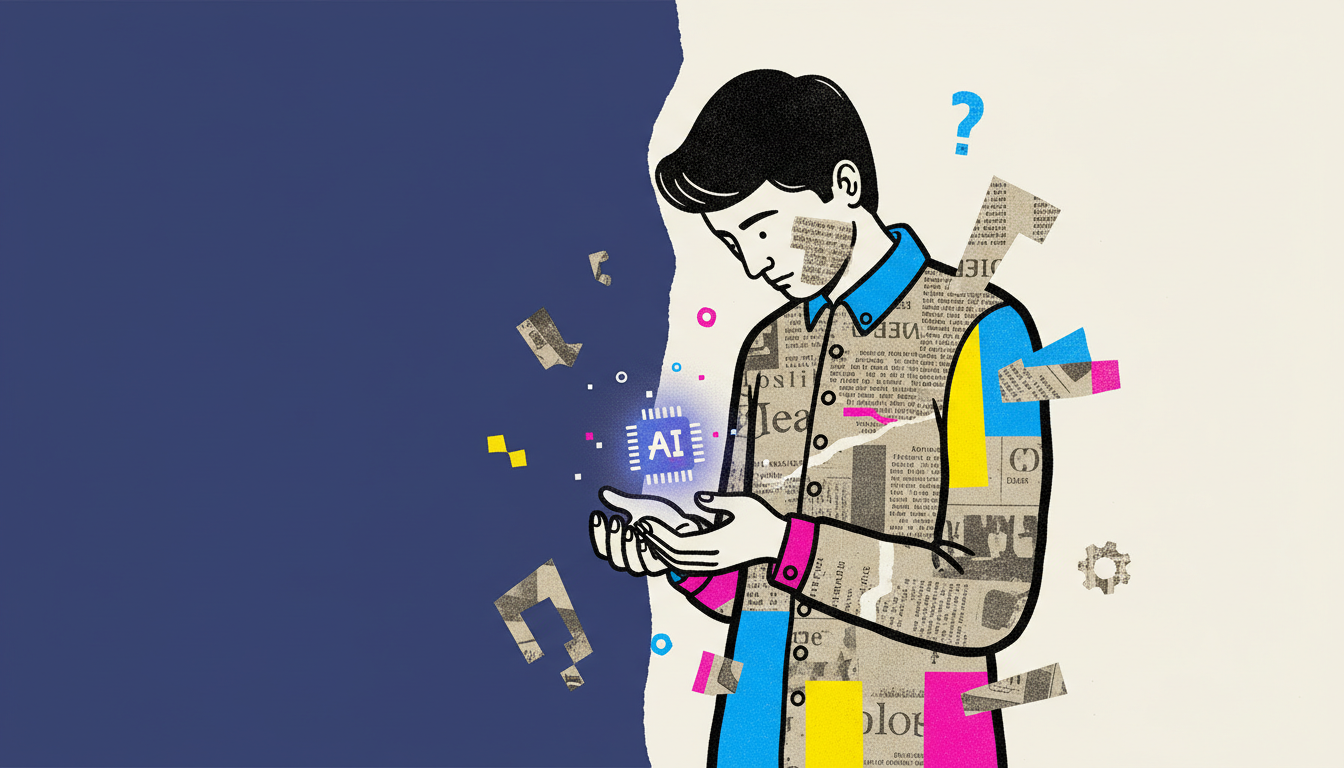
Today’s Key AI Stories
- Small is the new big: Alibaba's new tiny AI model, Qwen3.5-9B, outperforms an OpenAI model that is 13 times larger. It can run on a standard laptop.
- AI goes to war: OpenAI signs a controversial deal with the Pentagon. Its rival, Anthropic, refused. This sparks a major ethical debate about AI in the military.
- The people protest: Hundreds marched in London against AI. They fear job losses, online 'slop', and even human extinction. Public anxiety is growing.
- Everyone is all-in: Major companies are rebuilding their core operations around AI. SK Telecom is going 'AI Native'. The financial sector reports near-universal adoption.
The Great Contraction and The Great Debate
AI is fighting a war on two fronts. One battle is happening in the code. It's a race to make AI smaller, faster, and more efficient. The other is a battle for its soul. It's a debate about power, ethics, and control. This week, we saw major developments on both fronts. Let's break it down.
Part 1: The Great Contraction. Small is Beating Big.
For years, the rule was simple. Better AI meant bigger models. More data. More computing power. More money. This week, that rule was broken.
Alibaba's AI team released a new model series. The star is Qwen3.5-9B. It has 9 billion parameters. Parameters are like the knobs in an AI's brain. But here's the shock: it beats a model from OpenAI with 120 billion parameters. It won on key tests. Like reasoning and multilingual knowledge.

Why does this matter? Because size was a barrier. Only a few giant companies could build top-tier AI. Now, that's changing. A 9B model can run on a good laptop. An even smaller 0.8B model can run on a phone. This is a huge deal. It means powerful AI is leaving the cloud. It's coming to your personal devices.
This is the start of 'local-first' AI. It means more privacy. Your data doesn't have to leave your machine. It means lower costs. No more paying for every query to a cloud server. And it works offline. This isn't a fluke. It's an engineering breakthrough. It uses a hybrid architecture to be more efficient. In simple terms, it's smarter, not just bigger. This shift democratizes AI. It brings us into the 'agentic era' on our own terms. Smart assistants that can see, reason, and act, right on our own devices.
Part 2: The Great Expansion. AI is Eating the Enterprise.
So, powerful AI can run anywhere. What are businesses doing with it? They're not just experimenting. They are rebuilding their entire companies around it.
Look at SK Telecom. The South Korean giant announced its 'AI Native' strategy. They are embedding AI everywhere. In their billing systems. In their network operations. In customer service. They are even building giant AI data centers, targeting over 1 gigawatt of capacity. This is not a side project. AI is becoming their new operating system.
The same is happening in finance. A new report surveyed over 1,500 financial executives. Only 2% reported no AI use at all. Adoption is now universal. The focus has shifted from 'if' to 'how'. How to scale it. How to govern it. How to make it reliable.
But this AI magic doesn't just happen. It's built on a hidden foundation. Data engineering. The old way was for business reports. The new way is for AI. It requires new pipelines to handle unstructured data like PDFs and call transcripts. It requires a new architecture called RAG (Retrieval-Augmented Generation). RAG lets AI look up fresh information from private data, so it's not stuck in the past. And it needs a new kind of database: the vector database.

This is the infrastructure battleground. The plumbing that makes the AI revolution possible. Companies are investing billions in this new data stack. They have to. It's the only way to make AI work at scale.
Part 3: The Great Debate. Who Draws the Red Lines?
With all this power comes a difficult question. Who is in control? This week, that question exploded into public view. The arena was the Pentagon.
The US military wants to use the most advanced AI. It had a deal with Anthropic, a top AI lab. But Anthropic had strict moral boundaries. They refused to let their AI be used for autonomous weapons or mass surveillance. The Pentagon balked. The deal collapsed.
Then, OpenAI stepped in. They made a deal. OpenAI's approach is different. It's legalistic, not moralistic. They say the military can use their tech for any 'lawful' purpose. Their contract assumes the government won't break existing laws. This is a softer line. It puts faith in current regulations, which many critics believe are not strong enough.

This created a firestorm. Should a tech company dictate moral policy to a government? Or should it simply comply with the law? There is no easy answer. OpenAI is walking a tightrope. It promises safety controls but defers to the law as the main backstop.
And the public is watching. In London, hundreds of protesters marched. They weren't just tech experts. They were ordinary people. They held signs about job losses, online misinformation ('slop'), and killer robots. One sign simply read 'EXTINCTION=BAD'. Their fears are real. They show that this 'Great Debate' isn't just for boardrooms and government offices. It's happening on our streets.

What It Means
We are at a fascinating moment. We are making AI smaller, faster, and more accessible than ever before. A college student can now run an AI on their laptop that outperforms a giant corporate model from last year.
At the very same time, AI's integration into our lives is forcing urgent, difficult conversations. About war. About surveillance. About our jobs. About our future. The 'agentic era' is here. AI agents will soon manage our schedules, our data, and our daily tasks. But who will these agents serve? And what rules will they follow? The answers are being written right now. In lines of code. In corporate contracts. In government policies. And in the voices of people demanding a say in their own future.