March 13, 2026: AI Gets Real: From Wargames to the World Cup
AI is moving from chatbots to battlefields, stadiums, and cities. The Great AI Rollout is here, bringing complexity, cost, and questions of trust.

Today’s key AI stories
- The US military reveals it may use generative AI to help recommend and prioritize targets for strikes.
- FIFA announces AI will be the operational backbone for the 2026 World Cup, assisting teams, referees, and logistics.
- Google is now predicting urban flash floods by using Gemini to read and understand millions of local news reports.
- NVIDIA is releasing new tools, like Warp and Nemotron 3 Super, to solve the core economic and data problems of building real-world AI.
- A new report shows product engineers are cautiously adopting AI, demanding verification and governance for physical products where failures have real consequences.
- The cost of running multi-agent AI is creating a “thinking tax,” forcing a shift toward more efficient models and infrastructure.
The Great AI Rollout Is Here
For years, we talked about AI in the abstract. It was about chatbots. Image generators. Code completion. It lived behind a screen. A useful, sometimes magical, digital tool.
That era is ending. Today's news tells a different story. A bigger story.
AI is moving out of the digital world. It is becoming a core part of our physical reality. It's becoming the operating system for our most complex real-world challenges.
We are witnessing the Great AI Rollout. It's not just about better models anymore. It's about AI in cars, on battlefields, in stadiums, and protecting our cities. This rollout is messy. It's expensive. And it's raising fundamental questions about trust and control. But it's happening now.
1. The New Operating System: Managing Complexity
What is the hardest part of running a global event? Or a military operation? It's complexity. Thousands of moving parts. Millions of data points. Decisions needed in seconds.
This is where AI is finding its new role. Not as a feature, but as the central nervous system.

Look at FIFA. The 2026 World Cup is huge. 48 teams. 104 matches. Three countries. Instead of just adding a few AI gimmicks, FIFA is running the entire operation on an AI backbone. They built a custom 'Football Language Model'. It powers a tool called Football AI Pro. Every team, rich or poor, gets the same high-level match analysis. This democratizes data.
AI will stabilize referee body-cam footage for more transparent decisions. It will create 3D player avatars to make offside calls clearer. And behind the scenes, an 'intelligent command center' will connect all data from venues, broadcasters, and teams into one view.
This is not an enhancement. It is the new operating system for the world's biggest sporting event.
We see the same pattern in a much more serious domain. The US military.

For years, Project Maven used AI to analyze drone footage. That was pattern recognition. Now, defense officials say they could use generative AI—like ChatGPT or Grok—for something more. They could feed a list of potential targets into a classified chatbot. The AI would then analyze the data. It could rank the targets. It could make recommendations based on aircraft locations and other factors.
A human is still in charge. They must vet the results. They make the final call. But AI is no longer just finding things in photos. It's becoming a conversational, analytical partner in life-or-death decisions.
What it means
The shift is profound. We are handing over the management of immense complexity to AI. Humans are becoming supervisors, editors, and final approvers. The AI is the system that keeps the whole thing running. The core challenge is no longer just technical. It is about governance and trust.
2. Bridging the Digital and Physical Worlds
How do you teach an AI about the physical world? You need data about the physical world. But this data is often scarce, messy, or nonexistent.
Google faced this exact problem with flash floods. River floods are slow. You can measure water levels with gauges. But urban flash floods are fast and unpredictable. They can happen anywhere. There are no gauges on city streets. So, how do you train an AI to predict them?
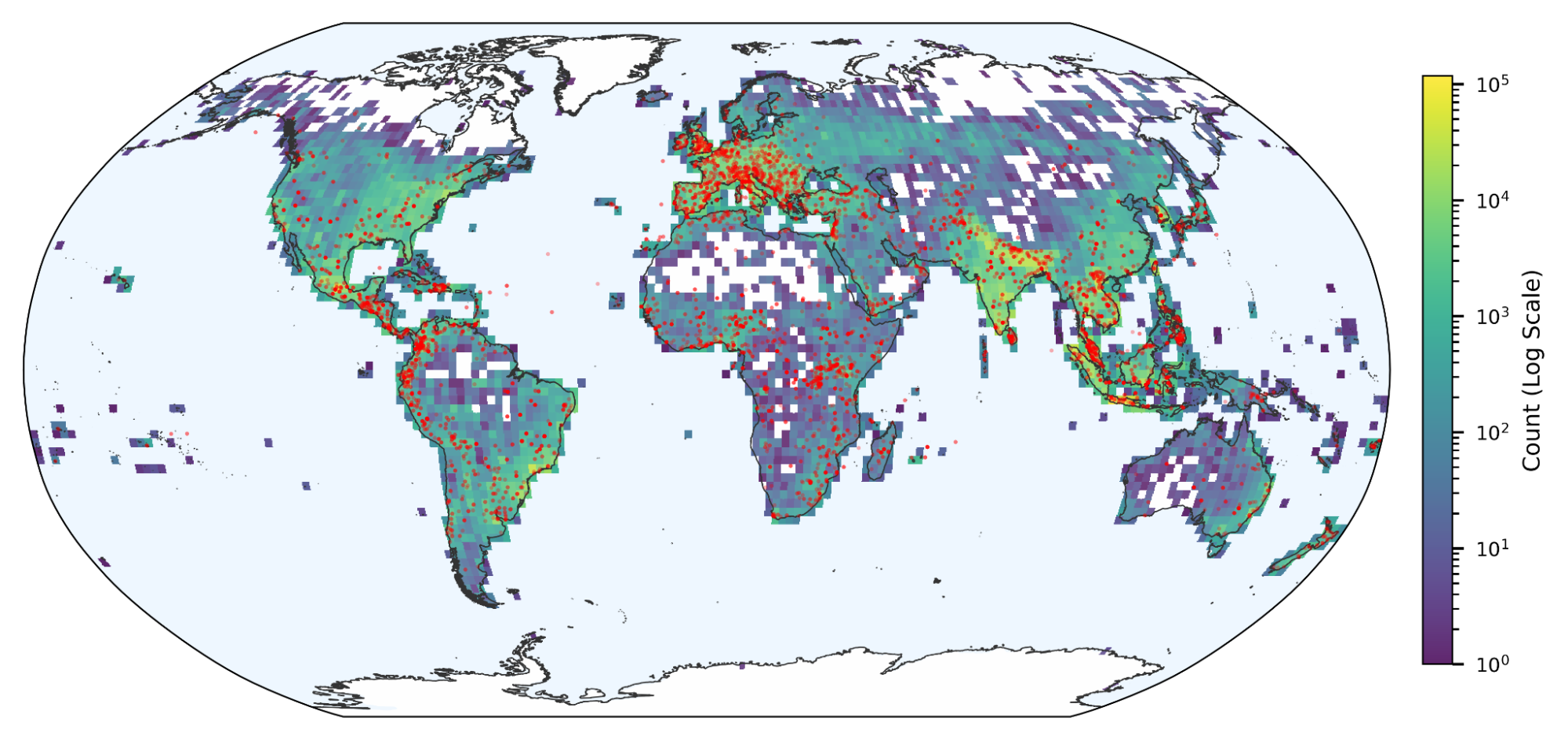
Google's solution is brilliant. They used Gemini to read the news. For years. In 80 languages. Their new system, called 'Groundsource,' analyzes millions of public news reports about past floods. It extracts the location, time, and details. It turns unstructured human stories into a massive, structured dataset of 'ground truth'.
Now, they have the data to train a model. The result? They can predict urban flash floods up to 24 hours in advance. This is a huge leap, especially for developing nations without expensive sensor networks. AI is literally reading our collective memory to protect our future.
This is one side of the physical coin: data. The other side is execution. How does AI operate in the real world?
NVIDIA is working on this with 'Edge-First LLMs'. This is about 'Physical AI'. It's for autonomous vehicles and robots. These machines can't rely on a distant cloud server. They need to reason in real-time. They have strict power limits. NVIDIA is building the specialized chips and software to run powerful models right on the device. This is the brain that will allow machines to interact with our world.
But as AI enters our physical products, a new sense of caution emerges. A new report from MIT Technology Review highlights this. Product engineers—the people who build our cars, appliances, and medical devices—are pragmatic. They are increasing AI investment, but slowly. For them, an error isn't a bad recommendation. It's a structural failure. A safety recall. A risk to human life. They demand verification, governance, and clear human accountability. They are building trust in AI one step at a time.
What it means
To make AI work in the physical world, we need two things: data and trust. Innovative methods, like Google's Groundsource, are solving the data problem. But earning trust, especially for high-stakes physical products, requires a slow, deliberate, and safety-obsessed approach. The hype of Silicon Valley is meeting the pragmatism of the engineering world.
3. The Engine Room: Building and Paying For It
This Great AI Rollout is incredibly powerful. It is also incredibly expensive. Two new problems have emerged: the 'thinking tax' and 'context explosion'.
Complex AI agents need to 'think' at every step. This costs computing power and money—a thinking tax. And to stay on track, they need to remember the entire history of a task. This creates an explosion of data, driving up costs further. How do we make advanced AI economically viable?
The answer lies in the engine room. In the unglamorous work of optimization and efficiency.
NVIDIA is tackling this with new tools. One is Nemotron 3 Super. It's an AI architecture designed to be efficient. It uses a mix of technologies to get more performance with less power. It has a massive one-million-token context window to prevent agents from losing their train of thought. This is designed to lower the thinking tax.

Another tool is NVIDIA Warp. To build an AI that understands physics, you need to train it on physics simulations. Trillions of data points. Warp is a framework that makes running these simulations on GPUs hundreds of times faster. It's a factory for producing the high-quality data needed to train the next generation of physical AI.
The optimization goes even deeper. As companies use AI for search and memory, they rely on vector databases. Storing millions of these vectors is a huge cost. A new analysis shows how techniques like Quantization and Matryoshka Representation Learning (MRL) can cut these storage costs by over 80% with minimal impact on quality. This is the plumbing. But without better plumbing, the whole system would be too expensive to run.
What it means
The future of AI is not just about bigger models. It's about sustainable models. The crucial innovations are happening in efficiency, data generation, and cost reduction. The companies solving these fundamental infrastructure problems are the ones enabling this entire revolution. We are moving from a race for capability to a race for efficiency.
The age of abstract AI is over. We are now in the age of application. AI is being woven into the operational fabric of our world, from stadiums to cities to security. The challenges are no longer just about code; they are about cost, trust, and the hard, messy work of real-world integration. This is just the beginning.