March 14, 2026: Physical AI Hits Factory Floors, NVIDIA Unleashes Cosmos, and the Military Gets Smarter
BMW deploys humanoid robots in Europe while NVIDIA advances physical AI models. Manufacturing enters a new era of automation.
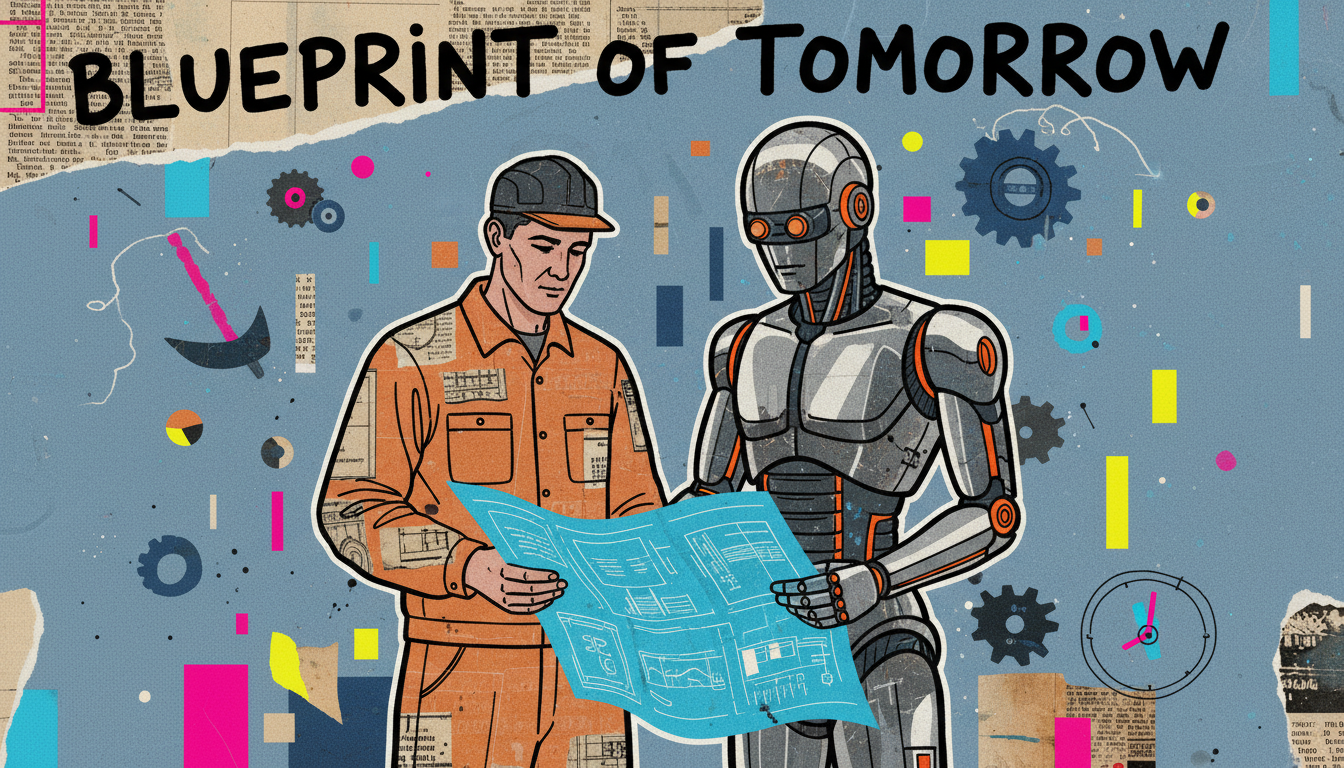
Today's Key AI Stories
- BMW deploys humanoid robots in Germany — Europe's first humanoid robot pilot launches at BMW's Leipzig plant, marking a new era for physical AI in manufacturing.
- NVIDIA expands Cosmos world foundation models — New updates bring faster synthetic data generation and advanced physical AI reasoning capabilities.
- Glass substrates could power future AI chips — Absolics begins commercial production of glass panels for next-gen computing hardware.
- Military AI targeting raises ethical questions — Pentagon explores using AI chatbots to rank targets for strikes.
- Prompt caching cuts LLM costs by 90% — New optimization technique dramatically reduces AI operating expenses.
Physical AI Goes Mainstream
The future of AI is no longer just digital. It's physical. It's on the factory floor. It's in the warehouse. It's working alongside human workers.
BMW Group has launched Europe's first humanoid robot pilot at its Leipzig plant in Germany. The robot, called AEON, is built by Hexagon Robotics. It's a wheeled machine that stands 1.65 meters tall. It can move at 2.5 meters per second. It can swap its own battery in 23 seconds. This enables around-the-clock operation without human help.

This isn't BMW's first rodeo. In 2025, the company ran a ten-month pilot at its South Carolina plant. There, a Figure 02 robot helped produce over 30,000 BMW X3s. It worked 10-hour shifts. It moved over 90,000 components.
Now the lessons learned are being applied in Europe.
"We're not in the dancing business," said Arnaud Robert of Hexagon Robotics. "We're in the working business."
The message is clear. Physical AI has graduated from demos to real work.
Why Manufacturing Matters
Manufacturing is becoming the proving ground for physical AI. Why? Because it's where the rubber meets the road. Literally.
Traditional automation excels at repetition. But it struggles with adaptability. Human workers bring judgment. But they are constrained by scale. Physical AI bridges that gap.

Microsoft and NVIDIA are betting big on this shift. They've partnered to build the infrastructure for physical AI. NVIDIA provides the AI computing power. Microsoft provides the cloud platform. Together, they want to help manufacturers move beyond pilots.
According to Deloitte, 58% of companies are already using physical AI. That number could hit 80% within two years.
NVIDIA Cosmos Gets Smarter
Speaking of physical AI, NVIDIA just dropped major updates to its Cosmos world foundation models.

Cosmos Transfer 2.5 brings faster data augmentation. It creates more diverse environments. It handles different lighting conditions. It handles scene variations.
Cosmos Predict 2.5 generates long-tail scenarios. It can create video sequences up to 30 seconds long. When trained on specific data, it delivers 10x higher accuracy.
Cosmos Reason 2 is the big leap. It adds advanced physical AI reasoning. It understands motion. It understands object interactions. It understands space-time relationships. It supports up to 256K input tokens.
These tools help create synthetic training data. That's crucial for building better robots and autonomous systems.
The Hardware Revolution
AI isn't just getting smarter software. It's getting better hardware too.
Absolics, a South Korean company, is starting commercial production of glass substrates for AI chips. This is a big deal. Glass can handle heat better than existing materials. It can enable 10 times more connections per millimeter. It can allow 50% more silicon chips in the same package area.

Intel is also pushing forward. The company is working to incorporate glass in its next-generation chip packages. The semiconductor market for glass could grow from $1 billion in 2025 to $4.4 billion by 2036.
What does this mean? Faster AI. More efficient AI. Cheaper AI.
The Military AI Question
Not all AI news is positive. The Pentagon is exploring using AI chatbots for military targeting decisions.
A Defense Department official said generative AI could be used to rank targets. The system would analyze information. It would prioritize targets. Humans would still check the results.
This raises serious ethical questions. Who is responsible if AI recommends a wrong target? How do we ensure fairness and safety?
The Pentagon's CTO recently claimed Claude would "pollute" the defense supply chain. Anthropic pushed back. The debate is heating up.
Meanwhile, Ukraine is offering its battlefield data for AI training. Allies can use it to train drones and other UAVs.
Making AI Cheaper and Faster
On a more positive note, new techniques are making AI more affordable.
Prompt caching is a game-changer. It can reduce latency by up to 80%. It can cut input token costs by up to 90%.
Here's how it works. When you call an LLM, the same input tokens often repeat. System prompts are the same. User instructions are similar. Instead of recalculating every time, the system caches the results. Future requests reuse those calculations.

OpenAI, Google, and Anthropic all offer prompt caching. The key is putting static information at the start of prompts. Variable information should go at the end.
This matters most for AI applications at scale. The more requests, the more savings.
Making AI Smarter
Building better AI systems is also getting easier.
Agentic RAG with hybrid search is gaining traction. Traditional RAG uses vector similarity to find relevant documents. But it struggles with specific keywords. Hybrid search combines vector similarity with keyword search. It finds more relevant documents.
Making it agentic is even more powerful. The AI agent can rewrite queries. It can fetch information iteratively. It can decide how to weigh different search methods.

The latest frontier models are smart enough to handle this on their own.
Meanwhile, developers are getting better tools. Five powerful Python decorators can optimize data pipelines. They handle JIT compilation, caching, schema validation, lazy parallelization, and memory profiling.
What It All Means
AI is evolving on multiple fronts. It's getting physical. It's getting cheaper. It's getting smarter. It's getting into new domains.
The question is no longer whether AI will transform industries. The question is how fast.
Physical AI in manufacturing is past the pilot phase. It's being stress-tested in real factories. The technology works. The economics make sense. The only question is adoption speed.
For businesses, the message is clear. Start experimenting now. The winners will be those who figure out how to combine human intent with AI execution.
The AI revolution is no longer coming. It's here.