March 18, 2026: AI Agents Go Enterprise, Mamba 3 Challenges Transformers, and the Pentagon Gets Serious About Military AI
NVIDIA launches NemoClaw for secure autonomous AI agents. Mamba 3 challenges Transformers with 2x efficiency. Pentagon eyes classified AI training.
Today's Top AI Stories
- NVIDIA launches NemoClaw — enterprise security platform for autonomous AI agents. OpenClaw hits 100K GitHub stars.
- Mamba 3 arrives — open-source architecture beats Transformers with 4% better language modeling, 2x inference efficiency.
- Pentagon plans classified AI training — wants AI companies to train on military secrets. Big security risks ahead.
- Google debuts multimodal embeddings — Gemini Embeddings 2 handles text, images, audio, and video in one model.
- OpenAI releases GPT-5.4 mini/nano — smaller, faster models for coding and high-volume workloads.
The Agent Revolution Is Here
NVIDIA just made the biggest bet yet on autonomous AI agents. At GTC 2026, the chip giant unveiled NemoClaw — an enterprise-ready platform for running AI agents that can plan, act, and execute tasks on their own.
CEO Jensen Huang called it plainly: "OpenClaw is the operating system for personal AI."
Here's what's happening. OpenClaw — the open-source tool that lets AI agents actually do things on your computer — exploded in popularity. It hit 100,000 GitHub stars in weeks. Developers love it. But there's one problem: security.
That's where NemoClaw comes in. It wraps OpenClaw with enterprise guardrails. Think sandbox isolation, policy controls, and audit trails. Agents can now work inside real companies without causing chaos.

What This Means
The agent era is no longer theoretical. Companies like Box and Cisco are already using autonomous agents. Cisco showed a demo where an agent handled a zero-day vulnerability in one hour. Complete audit trail. No human scrambling.
This is the inflection point. The question isn't if agents will take over enterprise workflows. It's how companies will control them.
Mamba 3: The Transformer Killer?
There's a new architecture challenging GPT-style models. It's called Mamba 3. And the numbers are striking.
Researchers from Carnegie Mellon and Princeton just released Mamba 3 under an open-source license. It achieves nearly 4% better language modeling than Transformers. But the real story is efficiency.
Mamba 3 uses half the "state size" while matching performance. That means double the inference speed on the same hardware. For companies running AI at scale, that translates directly to lower costs.

Why It Matters
Modern GPUs sit idle during AI decoding. Mamba solves this "cold GPU" problem. It can run 4x more mathematical operations in parallel. The architecture shift from "training efficiency" to "inference-first" design could change how companies deploy AI.
Enterprise bonus: Mamba enables hybrid models that combine efficient memory with precise storage. Long-context apps and real-time reasoning agents just got a lot cheaper to run.
Pentagon Wants AI to Learn Military Secrets
In a move that raises major concerns, the Pentagon is discussing plans to let AI companies train models on classified data.
Current AI like Claude already answers questions in classified settings. But it doesn't learn from that data. That could change soon.

The Risks
Experts worry about information leaks. A model trained on classified intelligence could accidentally surface sensitive data to unauthorized users. Think operative names or battlefield assessments.
"If you set this up right, you will have very little risk of that data being surfaced on the general internet," said one defense official. But that's a big "if."
The Pentagon is also working with OpenAI and xAI. The push to become an "AI-first" warfighting force is accelerating as conflicts escalate.
Google's Healthcare AI Gets Real
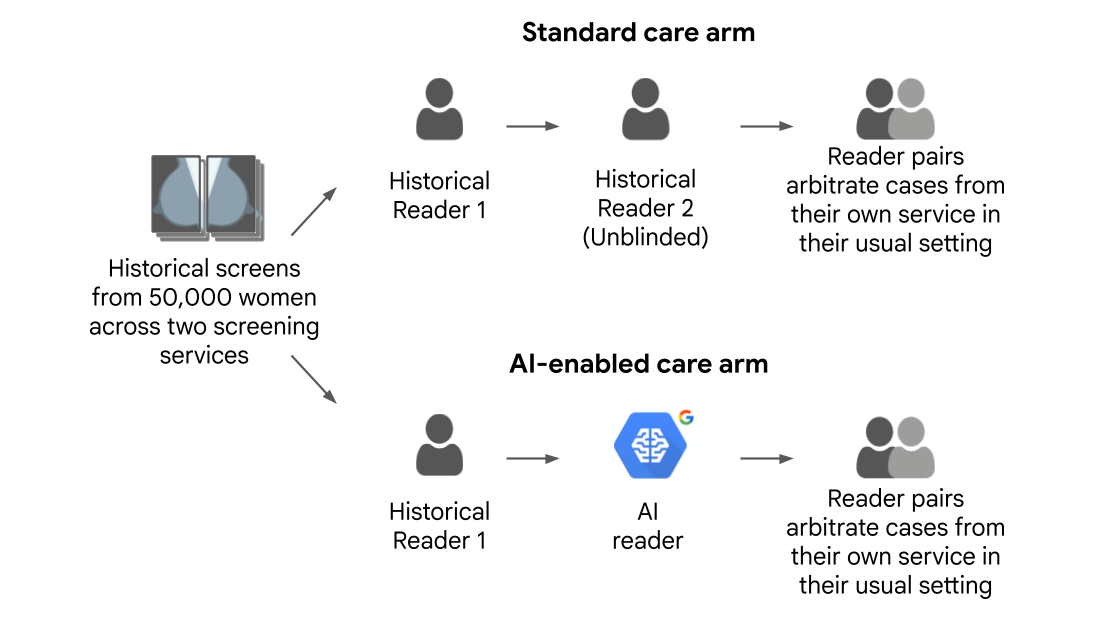
Google just showcased real results in medical AI. At The Check Up event, the company shared studies from UK hospitals.
The findings: AI improved breast cancer detection by 25%. It caught "interval cancers" that human radiologists missed in the standard double-read workflow.
What Google Built
- Personal Health Agent — acts like a team: data scientist, domain expert, and health coach in one
- AMIE — multi-agent system that interprets medical histories and complex images
- MedGemma — open-weight model being used in Indian hospitals for triage and screening
The big shift: Google is moving from research papers to real clinical settings. Over one million diabetic retinopathy screenings already done using Google's AI.
Multimodal Embeddings Just Got Simpler
Google released Gemini Embeddings 2 Preview. One model. Text, PDFs, images, audio, and video.
For developers building RAG systems, this is huge. Previously, you needed separate models for different data types. Now? One pipeline.

The Limits
- Text: up to 8,192 tokens (~6,000 words)
- Images: up to 6 per request
- Video: up to 2 minutes
- Audio: up to 80 seconds
It's a preview. But the direction is clear. Multimodal search is becoming seamless.
OpenAI's New Small Models: Cheap and Fast
OpenAI dropped GPT-5.4 mini and nano. Smaller models. Optimized for coding and high-volume tasks.
GPT-5.4 mini: 2x faster than previous mini. Costs $0.75 per million input tokens. Approaches the full model's performance on coding benchmarks.
GPT-5.4 nano: The cheapest option. Just $0.20 per million inputs. For classification, extraction, and simple subagents.
The strategy is clear. Not every task needs the biggest model. Sometimes fast and cheap beats slow and powerful.
The Bigger Picture
Three themes emerge from today's news:
- Agents are going enterprise. NVIDIA's NemoClaw is the first serious attempt to secure autonomous agents at scale. The productivity upside is massive. So is the attack surface.
- AI infrastructure is evolving. Mamba 3 challenges the Transformer monopoly. Goldman Sachs says investors are shifting money to data center operators. The compute race isn't slowing.
- AI in sensitive domains is accelerating. Healthcare AI is in clinical trials. The Pentagon wants classified training. This raises questions we're only beginning to ask.
The agent era is here. The only question left is how to control it.